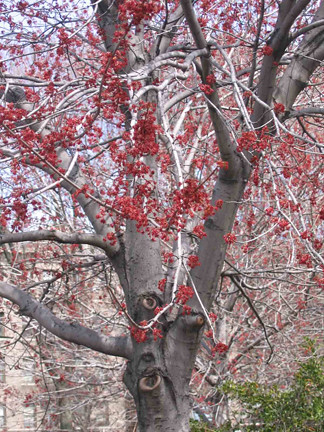
04 May 2005

Rare Oak Woods, Staten Island
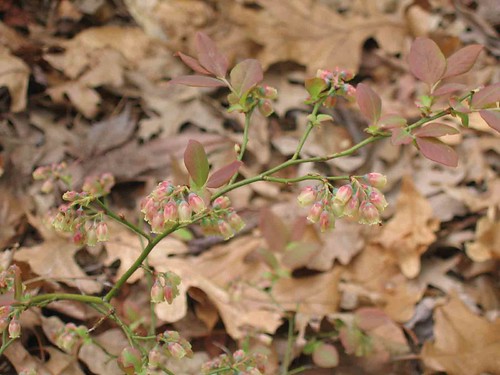

Early lowbush blueberry (Vaccinium pallidum) in flower. The flowers are always described as "white", but as you can see, they are so much more. A common NYC native shrub in dry, sandy soils.


Today I went to Conference House Park, to look for a site to plant rescued plants from Kreischerville up the road. These "rescued" plants are listed as rare in New York State - blunt spikerush (Eleocharis ovata) (S1) & fringed boneset (Eupatorium hyssopifolium var. laciniatum) (S2), which is the reason why we went to so much trouble to dig some up - otherwise they'd be sitting under the Home Depot, Target, Bed Bath Beyond, Chilis & Christmas tree store that was put there in its place. God knows we need more strip malls, especially sharing a very long border with a state nature preserve (Clay Pit).

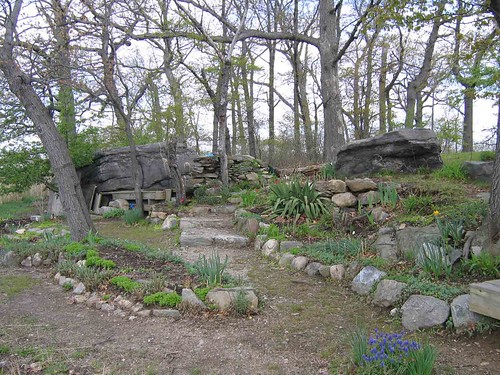
Anyway, on my way to Conference House Park, I stopped by an area we refer to as "Rare Oak Woods" because it houses, wait for it, rare oaks. Onsite there are willow oaks (Quercus phellos), an S1, that are hybridizing with more common oaks (black, red). These hybrids can be prodigious producers of acorns, and subsequent generations often results in pure willow oak offspring. A super rare oak is the hybrid Q. x rudkinii, a cross between willow oak and blackjack oak (Q. marilandica), another rarity. Mostly these plants are rare in NY because they are at the northern part of their range. This also means that without all the hybridization, it would be difficult for them to reproduce. Ah, oaks. For more on NYS rare plants

Rare Oak Woods has very sandy, glacial outwash soils, as does this whole area of southern SI. This makes for really neat plant communities, with lots of heath shrubs. I love the heaths. Most people think of Heathcliff & Catherine ala Charlotte Bronte (writing out "Heathcliff" made me think of that Michael Penn song, "No Myth". I really like that song. Whatever happened to him anyway?); but the northeast has lots of native woody plants in this family (Ericaceae).
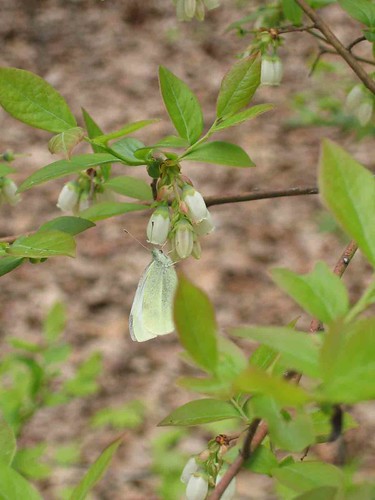

Highbush blueberry (Vaccinium corymbosum) in flower, with a Lepidopteran visitor. Another common native shrub.

Yet another interesting plant was pawpaw (Asimina triloba), another rarity (S2). This tree isn't actually native to NYC, it naturally occurs in western New York State, but there is a colony in Staten Island, planted by a former homeowner in the 1800s with seed from Indiana. The grove produces flowers (see below) and fruits. The latter are edible, reputed to resemble bananas both in taste and aspect. Haven't tried any yet, but hopefully this summer I will remember to make a trip down there.
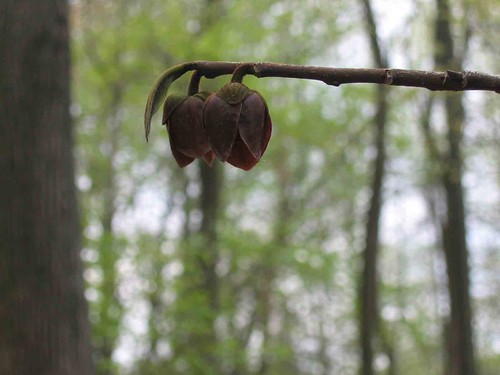

Pawpaw (Asimina triloba) in flower, native & rare in New York State.

03 May 2005

Old growth & salt marshes in Pelham

I don't know what it is about Pelham Bay Park, but lately I feel like I live there. Not that I am complaining. Anyway, had a field meeting out there and went to part of the park that I had never been to before. It was like the enchanted place Olivia Newton John sang about in "Xanadu". But more on that later.

Mockernut (Carya tomentosa), a NYC native tree, leaves emerging with ants.

First we walked through some old growth forest on Hunter Island. I know, everyone tells you there is no old growth forest in New York City. Well honey, you can now tell your friends they are all washed up. Here is the proof...

tulip tree (Liriodendron tulipfera) trunk

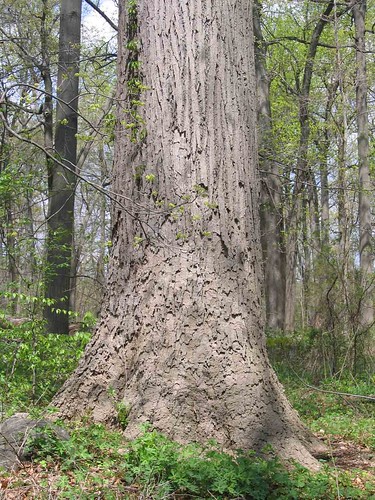
See how the bark on the tulip tree is at the base, how it's broken up? That is a sign of old growth in trees. "Old growth" is defined as >150 years, although I think tulip trees may reach the fissured bark stage earlier, around 125 years or so. But you get the point - OLD.


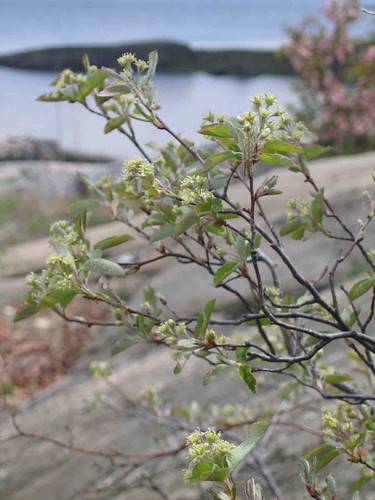
dwarf serviceberry in flower - native and uncommon in NYC - very cool!
So back to Xanadu. We walked out over the salt marsh to one of the many outlying islands, and it was breathtaking (except for the scary vodoo doll found by Erik Kiviat). Here was a sandy soil community of juneberries, sassafras, heath shrubs, panicled hawkweed and gall-of-the-earth. This was the first time I had seen dwarf serviceberry (Amelanchier spicata), found in only 3 parks in the city. I was reveling in it - a pristine, untouched chunk of nature. Ha! the other side of the island had this...

I couldn't believe it! After I stopped ranting, I thought, well, at least these homeless folks have a little hobby. Later I found out that they are not homeless, but local old Italian guys who think the park is their private property. Warning to the old men, I am watching you.

26 April 2005

The secret section in Central Park's conservatory garden

Plants native to New York on display in Central Park
The Conservatory Garden at Fifth Avenue and 104th Streets happens to be directly opposite my office. I hardly ever go in there, though, since as the weather warms up, I have natural areas to attend to. But today, mired in office work, I took a break from the desk and walked over through the big iron gates.

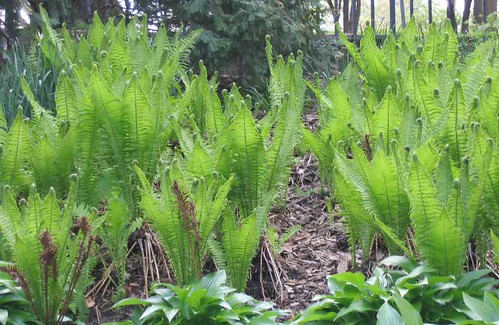
emerging ostrich fern (Mattheuccia struthiopteris) looks majestic. Note last year's reproductive fronds. In the wild, this fern is native & very rare in NYC, found reportedly in Pelham Bay Park and nowhere else. It is rare in New York State.
There are always flocks of people, nay hordes, masses, a sea of humanity milling through the garden, tourists oohing and ahing at the tulips and euonymus (yawn). What most of the don't know is that behind the well-manicured hedges, there are sweeps of native plants in all their splendor. I don't believe these were part of the Miller redesign, but they are a nice touch. I just wish they were labelled as such, then people might be more apt to think of native plants as less weedy and more gorgeous.

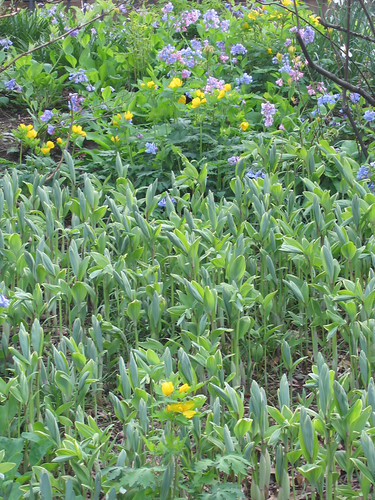
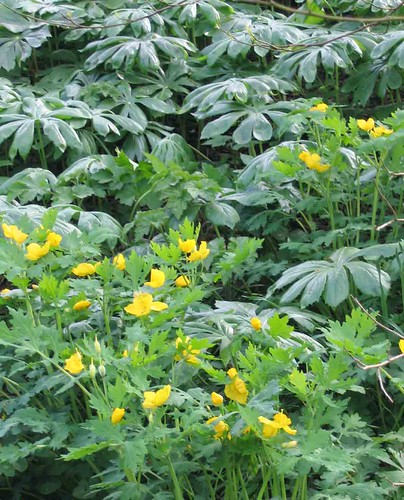
Mayapple (Podophyllum peltatum) and wood poppy (Stylophorum diphyllum)
, both are shade tolerant native plants found on forest floors. Note that the poppy has an exotic doppleganger, celandine (Chelidonium majus), which can be invasive. When buying native plants, ask for Latin names to be sure what you are getting.

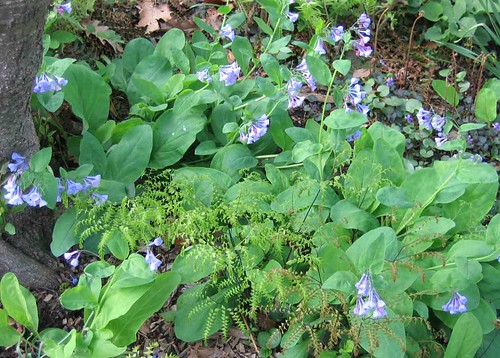
Virginia bluebells (Mertensia virginiana) & unfurling fronds of maidenhair fern (Adiantum pedatum).

25 April 2005

Gratuitous flower picture


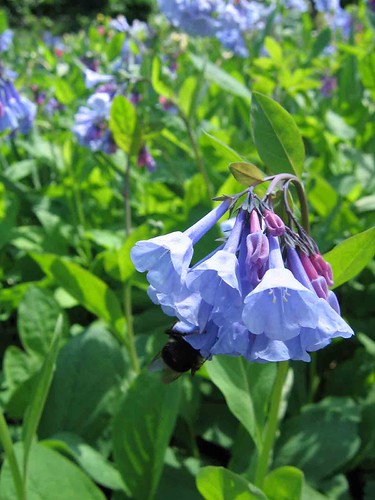
Virginia bluebell (Mertensia virginiana)
I'm in a bluebell state of mind.

21 April 2005

Wildflowers of Pelham Bay Park


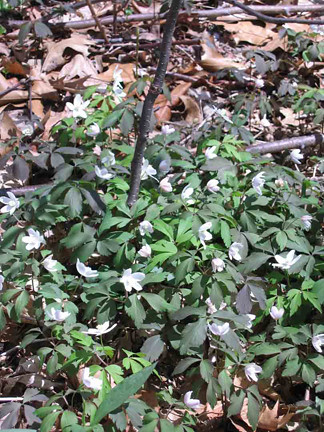
wood anemone (Anemone quinquefolia), a NYC native spring ephemeral

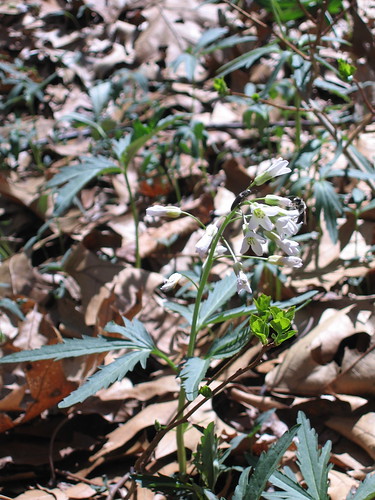
Today was a great day to be in Pelham Bay Park. Spring ephemerals were everywhere! I counted 7 patches/populations of wood anemone (Anemone quinquefolia) (see above), lots of trout lily (Erythronium americanum) and the ubiquitous common blue violet (Viola sororia). Also observed something very interesting - insect visitors to native and exotic flowers. One of the largest patches of cut-leaf toothwort (Cardamine laciniata) had loads of insect visitors. It looked like a Liliputian JFK, with syrphid flies, cabbage whites, beetles (one of which may have been a click beetle), predatory wasps, solitary bees - amazing. Then, a few feet away, began a biological desert - acres and acres of periwinkle (Vinca minor). Walking through this exotic invasive (a fav of homeowners), I saw only 2 bumblebees and one wasp. That's it! Food for thought.

cut-leaf toothwort (another a NYC native spring ephemeral) with beetle visitor (look carefully)

Other plants seen - white bark of gray birch (Betula populifolia), far too much of day lily (Hemerocallis fulva) the popular exotic invasive that is smothering our lovely spring ephemerals, emerging leaves of white oak (Quercus alba) tinged with red, a cabbage white (exotic butterfly) laying eggs on garlic mustard (exotic, invasive plant), the beautiful spring azure (butterfly), a just emerging jack-in-the-pulpit (Arisaema triphyllum), the showy leaves of alum root (Heuchera americana) - finally, a native plant that is popular in the garden.

daylily invading (invaded really) forest understory


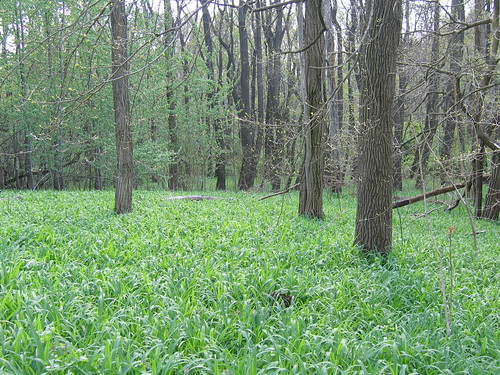
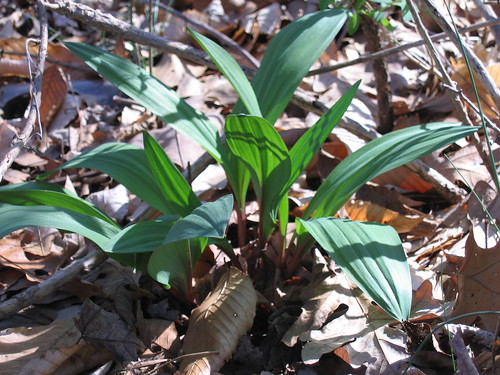
The most exciting find of the day was ramps (Allium tricoccum)...a native spring ephemeral and a new listing for our records!

ramps (Allium tricoccum) leaves - flowers emerge after leaves die back (another NYC native spring ephemeral)

11 April 2005

Spring ephemerals


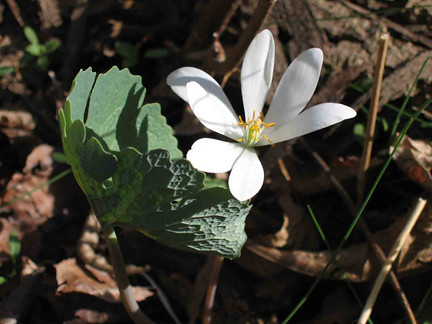
Bloodroot (Saguinaria canadensis) a NYC native spring ephemeral, in Pelham Bay Park in the Bronx
April is the onset of our flowering season, and some of the earliest herbaceous bloomers are called "spring ephemerals." The term is appropriate, since their flowers are fleeting and the plants disappear in the heat of the summer. These species are found in undisturbed moist, rich woods, and have a small window in which to store up nutrients for next year's flowers. Leaf out of canopy trees curtails photosynthesis, so they enjoy full sun early in growing season, and are resigned to shade the rest of year. One of our earliest and loveliest is bloodroot (Saguinaria canadensis). Its porcelain white flowers are open and welcoming to early insect visitors. The leaves resemble large, scalloped satellite dishes, angled to soak up any spare sunlight that finds its way to the forest floor. The most phenomenal display of these lovely plants is in the eponymous Bloodroot Valley in the Staten Island Greenbelt. Here it is locally abundant, but in New York City bloodroot is somewhat rare; found in only six parks. As with other spring ephemerals, its seeds are dispersed by ants. Over a 1000-year period, such seeds may only travel 100 yards from the parent plant. This means the likelihood of recolonizing a forest once the plant has disappeared will happen exceedingly slowly if at all.

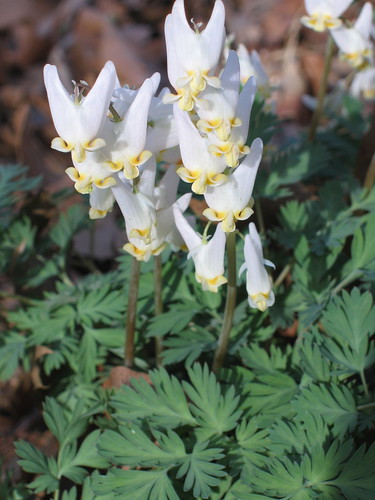
Dutchman's breeches (Dicentra cucullaria), a NYC native spring ephemeral, in Pelham Bay Park in the Bronx
Other New York City spring ephemerals include: wood anemone (Anemone quinquefolia), broad-leaved toothwort (Cardamine diphylla), spring beauty (Claytonia virginica), Dutchman's breeches (Dicentra cucullaria), trout lily (Erythronium americanum), and violets (Viola species).


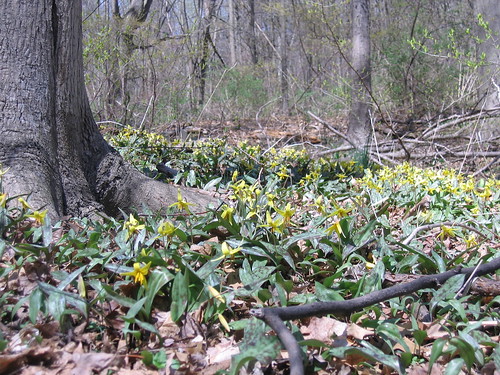
trout lily (Erythronium americanum), another NYC native, covering the forest floor in Pelham Bay Park in the Bronx. Populations this large of the slow growing plant are many decades old.

06 April 2005

Finally spring - Van Cortlandt Park


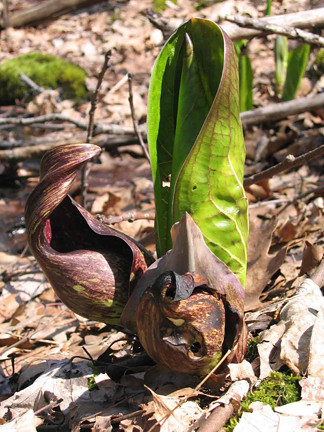
Skunk cabbage flowers & emerging leaves (common NYC native plant)
After what felt like an eternity, the wait is over! Skunk cabbage (Symplocarpus foetidus) and red maple (Acer rubrum) flowers! Skunk cabbage is an especially interesting plant. It is a member of the Arum family, whose members are typically found in the tropics. (Another temperate member is Jack-in-the-pulpit). The flower consists of a maroon mottled spathe hiding the reproductive parts called the spadix. The flowers coloration and smell (an unpleasant mixture of dung and rotten meat) attracts some beetles and flies that think it's a dead animals (the preferred places to lay eggs). These insects are excellent pollinators. Invertebrate visitors also get the spa-treatment. In February and March, skunk cabbage flowers are able to poke their way through the winter ground by melting the snowy layer above. Through thermogenesis, the flower is kept at a toasty 70 degrees F. This warm air also helps to disseminate the floral "fragrance".

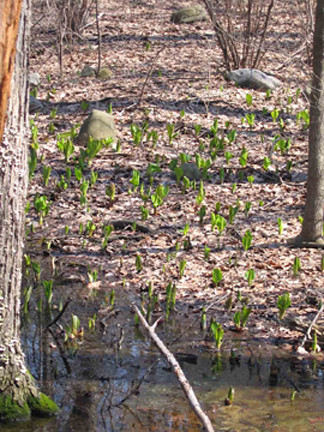
Swamp forest of skunk cabbage
Certainly, red maples and skunk cabbage have been in bloom for a few weeks now, but I am starting to see other signs of greenery - emerging leaves on both; plus found a patch of trout lily (Erythronium americanum) leaves. These were only about 2" long, so it will be at least a week before flowers appear . Also PA sedge (Carex pennsylvanica) had leaves and immature flowering stems. Lots of aster & solidago rosette leaves starting to emerge, some nice clusters of round-leaved pyrola (Pyrola rotundifolia). A new listing for the park - wintergreen (Chimaphila maculata). The latter two species are encouraging signs of healthy forests.

Flowers of red maple (common NYC native plant)