Showing posts with label forests. Show all posts

05 May 2007

A word about tent caterpillars


Forest Tent Caterpillars are unsightly but they are native and therefore have natural enemies here so the worst thing to do is to use insecticides (which would also kill their natural enemies directly or indirectly). While they can cause partial defoliation of some trees (cherries seem to be among their favorites) the trees are not permanently affected and indeed have evolved along with this mild defoliation pressure from these caterpillars. They really should be left alone. They have many natural enemies in the insect world. Caterpillars are frequently parasitized by various tiny braconid, ichneumonid, and chalcid wasps. Several predators and a few diseases also help to regulate their populations. This, in part, accounts for the fluctuating population levels from year to year. Birds and small mammals are known to eat them as well.

If you must get rid of them in your own yard: Remove the egg masses during winter to reduce the problem next spring. In the early spring, small tents can be removed and destroyed by hand. Larger tents may be pruned out and destroyed or removed by winding the nest upon the end of a stick.


For more information

02 May 2007

Time to pull the mustard

Garlic mustard (Alliaria petiolata), that is. This exotic wildflower, introduced to the U.S. from Europe in the late 1800s, is killing our woodlands.

From the New York Times, May 2, 2006:

Researchers have found that it disrupts a healthy relationship between hardwood tree seedlings and soil fungi, with results that can be disastrous for a forest.

Many plants make use of arbuscular mycorrhizal fungi, which form an elaborate network of filaments throughout the soil. These fungi are a diverse group, but they all have one thing in common: they help plants take up nutrients from the soil, getting carbon in return.

Garlic mustard is a member of the mustard family, "one of the very few families that do not need to associate with mycorrhizal fungi at all," Dr. Stinson said. These species produce chemicals that have antifungal properties. Native mustards have been around long enough, she suggested, that the mycorrhizal fungi have learned to live with them. But the fungi haven't had time to adapt to garlic mustard. "It basically is killing off the fungi," she said.

It bullies out our native spring ephemerals, it secretes a compound which destroys the soil fungi that is critical to the survival of our trees, and it fools a native butterfly to lay eggs on it that its the caterpillars can't eat. Here's a primer on the proper protocols for pulling it out. It's a prolific seeder, so bagging it is important.

23 April 2007

Corson's Brook Woods 07

Last year was my first time at Corson's Brook Woods, and it made a big impression on me - such a mecca of spring wildflowers! So, I visited again this year and it did not disappoint.

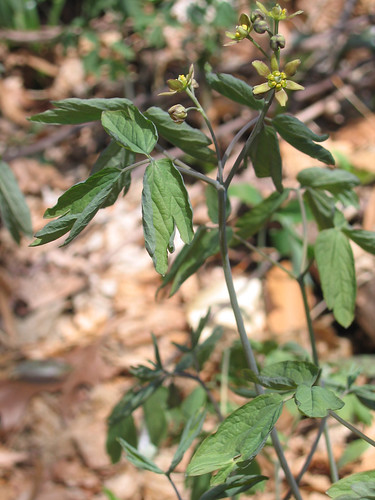
Blue cohosh
(Caulophyllum thalictroides). A striking spring ephemeral, with its unusual flower color and greyish blue glaucous stem. Rare in NYC.

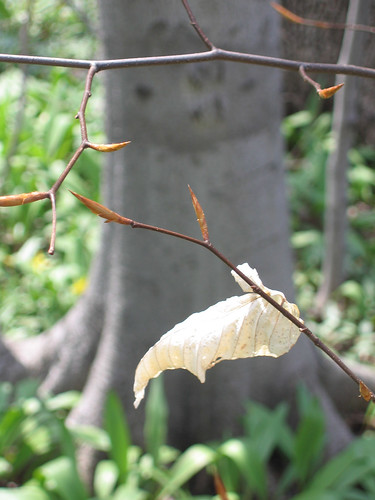
American beech
(Fagus grandifolia). I don't know why, but beech trees hold onto their leaves all winter. They are a welcome splash of color in a winter woodland - and even in spring. Rich forest soils.


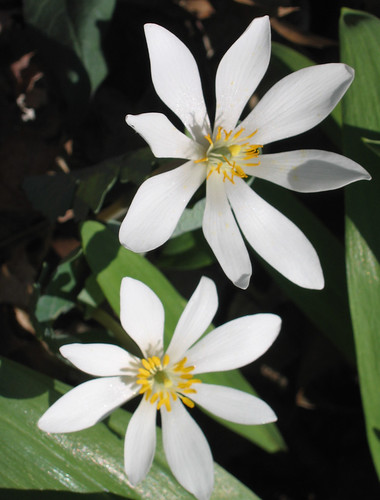
Bloodroot (Sanguinaria canadensis). Pure white. Lovely and fleeting. Rare in NYC.

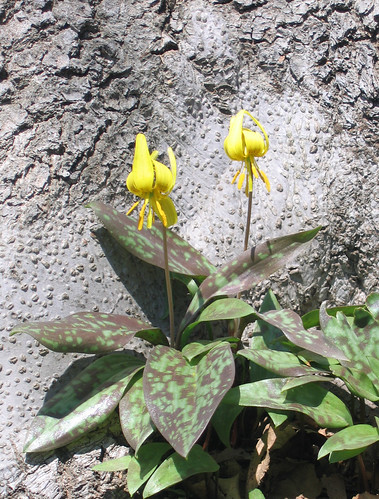
Trout lily (Erythronium americanum). An impressive amount, it just went on and on. These types of shade tolerant species are slow growing, and so such large colonies are very old - the population could've been many decades old.


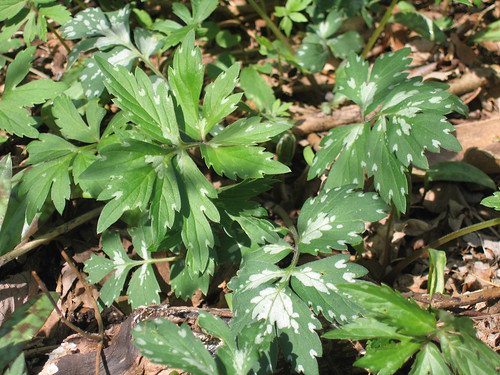
Virginia waterleaf (Hydrophyllum virginianum). Decorative foliage - the silvery spots that look like water stains. I'm surprised this isn't used more in the hort trade. It's a great groundcover. Found in rich forest soils and floodplains. Rare in NYC.

06 April 2007

Destruction at Split Rock Golf Course

Parks does it again. Now the issue is natural areas within golf courses (that were originally carved out of...natural areas). Split Rock Golf Course in Pelham Bay Park in the Bronx is now under new management. It seems there was nothing in the contract about leaving things as is . These folks want every blessed inch within the fence to be golf turf. Arck! And we had just gotten the other company to stop mowing the rare purple milkweed!
Surveying the damage...


Persimmons - a state listed rare tree. Now you see them...


Now you don't! Chipped into a woody pulp. It goes on...I just don't have the stomach for this anymore.

04 April 2007

Magnolias face perilous future


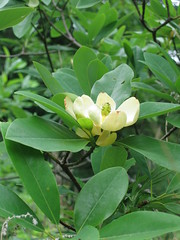
The spectacular bloom of a magnolia may be a very common sight in gardens, but in the wild it is a different story.

A new report has found that over half the world's magnolia species are
facing extinction in their forest habitats. To wit, the sweetbay magnolia pictured here

17 November 2006

NJ Pinelands Drawings at Rutgers


A historical collection of NJ Pinelands botanical drawings was acquired by the Alexander Library of Rutgers University (my alma mater). This collection of black-and-white illustrations was created by Dr. Albert List, Jr. (1928-2005). List was a botany professor at Drexel University with an interest in field botany and a training in art. Included in this donated collection are an estimated 1000 drawings of vascular plants (a few insects and several mosses, lichens, etc too), unpublished manuscripts, and notes. What a boon to local botanists!

More on Albert List.

18 October 2006

A gorgeous fall day

These pictures will make office workers everywhere weep with envy at how sweet it is to be a field biologist. Today I was working along Staten Island's South Shore.
Fall foliage isn't limited to the trees. Here bracken fern (Pteridium aquilinum) glows a golden hue. {Most people think of ferns as dew-covered fronds growing lushly on the rich forest soils in the umbrage of canopy trees. Bracken fern laughs in the face of convention. It is a sunshine-embracing, sandy soil inhabiting fern. It is adapted to fire, with its root stock (rhizomes) nestled deep in the earth to avoid the flames. It's also quite common - keep an eye out for it the next time you are in the pine barrens or on Staten Island in Conference House Park or Clay Pit State Park Preserve.}

Here you can see clearly the glacial till sandy soils. The vegetation - trees - gray birch (Betula populifolia) and sassafras (Sassafras albidum) and that's a scrub oak to the right. The pine is short-leaf pine (Pinus echinatus). The shrubs are black chokeberry (Photinia melanocarpa) or if you are old school (Aronia melanocarpa) and the gorgeous reds in the background are highbush blueberry (Vaccinium corymbosum). The cloud-like white puffs are narrow-leaved boneset (Eupatorium hyssopifolium var. laciniatum), a New York State rare plant.

03 October 2006

The Garden State

Good things going on in New Jersey:

A new watchdog organization forms to protect the Highlands
With increasing pressures to further develop and fragment the New Jersey Highlands, New Jersey Conservation Foundation and its conservation partners are forming a new watchdog organization—the New Jersey Highlands Coalition.

Statewide vision for land preservation
Garden State Greenways, is available free to conservation advocates, regional and local planners, government agencies, community leaders and others.

28 September 2006

Plants 0, Recreation 1

This is a charming little change in Parks' policy from allowing only passive recreation to now installing mountainbike trails in natural areas throughout the city. These pictures are from Cunningham Parks in Queens. I have a couple of issues, aside from how devastating this will be to ferns and wildflowers of the forest floor.

The propaganda (which, please note, was written by the mountainbike person doing this work), speaks of erosion:

"There's a common misconception that bicycles cause erosion damage to the trails. In response, a group of local mountain bicyclists decided to band together and educate themselves on the science of trail erosion and how bicycles could be ridden with minimal impact. Fueled with information provided by the International Mountain Bicycling Association (IMBA) and the US Forest Service, a management plan began to take shape."

First, I would like to see the literature that supports the contention that mountainbikes don't erode trails. But that will never happen. You know why? It doesn't exist. You can, I imagine, minimize erosion, but there will always be erosion associated with mountainbiking.

Second, you want to see their answer to erosion? Look below...


That ditch off to the side? THAT is the result of their managment plan. These are placed every so often along the trails where there are slopes to encourage water (and thus water borne entities, such as soil) to pool. There is still plenty of erosion happening. What is no longer happening is the soils ending up on sidewalks and roadways when it rains. Now the soil settles into these little pools. So it keeps civic infrastructure tidy, but does nothing to retain the uppper soil layers. aka the seed nursery aka the bed of all future trees.


This is utterly awful. Acres and acres of destruction caused by all terrain vehicles - those off road motorized contraptions. Cops tell the drivers to go in the parks - these things are illegal on city streets. But see what happens when cops send these guys into the woods? This is a living graveyard. Once those trees die, nothing will take their place. Shameful. Why doesn't the Parks Department put in perimeter protection to keep these vehicles out? It's a cheap and easy solution, but there is obviously no will.


25 September 2006

Scary Seton Falls Park

A little early for Halloween - scary but true story...

While monitoring vegetation in Seton Falls Park in the Bronx along Rattlesnake Creek approximately 100 yds from the falls area, I noticed 3 boys, about 13 years old, congregating nearby. When I asked if they needed some help, they responded with lewd and threatening comments, and then ran off. I was a little rattled, after all I was in a ravine, unseen (and probably unheard) from the street. About 10 minutes later, they returned to throw rocks at my head. Charming. At this point I ditched the field work and called the police as I promptly left the park. Once the two officers arrived, they drove around a bit to look for the kids, but no luck.

In the midst of the melee, I did come across new plant finds for the park: large-toothed aspen (Populus grandidentata) and the forb ditch stonecrop (Penthorum sedoides). Both are native, the latter is NYC-rare.

19 September 2006

Orchids Found in SI


Today I went out with my pal Ray to root around along Staten Island's south shore...won't say exactly where...and we found two orchid species new to City records – large coralroot (Corallorhiza maculata) and bog twayblade (Liparis loeselii). Large coralroot lacks greenery - it has tawny brown stems and no leaves. This is because it does not photosynthesize. It is saprophytic, meaning it feeds off organic matter, like fungi. It is added in its nutrient intake by a short, stubby, branched root that resembles coral.
Small white, purple spotted flowers appear in late summer.

As the name suggests, bog twayblade is found in wetland, open habitats. It has unremarkable yellowish-green flowers that are only 1/4” long that bloom in late summer.

15 September 2006

Rare Plant Hunting

Today I romped around Pelham Bay Park in the Bronx. I located NYS-listed rare plants Eastern gama grass (Tripsacum dactyloides) and common persimmon (Diospyros virginiana) on an upland copse in Goose Creek Marsh. I noted something interesting – that the Eastern gama grass only appears ringing the upland perimeter of Phragmites, which is highly invasive. Where Phragmites was not observed, gama grass was also absent. T. dactyloides was noted as bearing seeds, but it was too early for the persimmon’s fruits.

Also found a patch of Canada mayflower (Maianthemum canadense). This patch was very small in both size and number of leaves (ramets). Given the undisturbed nature of the site and the seemingly high habitat quality, one would expect to find the plant extensively clonal here - aka a much larger patch. This population will be incorporated into my study of habitat quality using mayflower as an indicator species for forest quality.

New plant listings found and identified from this trip include: climbing hempweed (Mikania scandens), water plantain (Alisma subcordata), three-nerved joe-pye weed (Eupatorium dubium); these are all NYC rare and new finds for the borough. I also found the NYC willow herb (Epilobium coloratum) and the not rare but still cool tussock sedge (Carex stricta).

13 September 2006

New shrub in Fort Tryon

Today I was in Fort Tryon Forest, northern Manhattan. Most people know the garden, but there is also a woodland that hangs over the Henry Hudson Expressway, just south of Inwood Hill Park.

This is one of those sites where there weren't a lot of existing records, because on a casual walk through I got 52 new listings. The most exciting was yellowroot (Xanthorrhiza simplicissima), because this
species is new to City records. The shrub has deep green, pinnately divided leaves, that sprout in a tuft. It flowers in early spring, with many tiny purple flowers in drooping racemes. (And yes, it does indeed have yellow roots). The plant is not native to New York City, its range is south and east, from Pennsylvania to Florida.

26 August 2005

BBQ


Today, I was in Bronx River Park, monitoring a recently completed restoration project where much native wetland vegetation had been planted in place of Japanese knotweed. We were taking a lunch break, & relunctantly decided that we also needed to use the restrooms (which are horrifying on so many levels). As we approached the building, I smelled smoke. The source of the billowing gray plumes? A clean cut sixteen year old kid. He had an interesting little set up, as you can see from the photo.

"Put it out!" I yelled. He responded as if underwater, all movement slow & deliberate. He did make some attempts to squelch the raging fire, none of them very impressive. Meanwhile I was fuming. It hasn't rained in weeks! What if this had gotten out of control? Fortunately it was rather far from the forest. Unfortunately it was right next to the playground & adjacent to the Metro-North train line. Obviously, I was not dealing with the sharpest knife in the drawer.

He finally climbed up, out of the pit, to speak to me. He had an innocent face & indescipherable language skills.

"Da ya wa sa ra?"
"What?!?"
"Da ya wa sa ra?"
"Again, what?"
"Da ya wa sa ra?"
"I have no idea what you are trying to say."
"Ra! Ra! Ra!"
At which point, he holds out his hands to offer me - not "ra", but "ribs".

"They're good. I make good bar-be-cue"
"Well, there are facilities in other parts of the park where you can cook out to your heart's content. But you cannot do it here. We don't allow make-shift grilling."
"Oh. But they're gooooooood."
"No doubt, but you'll have to find yourself another place to hone your culinary skills."

During the course of our little tete-a-tete, he began to walk closer & closer to me. Finally, I told him he was welcome to stay & wait with me for the police to arrive.

After an "oh, man!", he hoped on his bike, pre-packed with his cooking gear & rode away. It was then I noticed the goulish Halloween mask attached to his milkcrate full of tools.

04 August 2005

Why didn't I think of this?

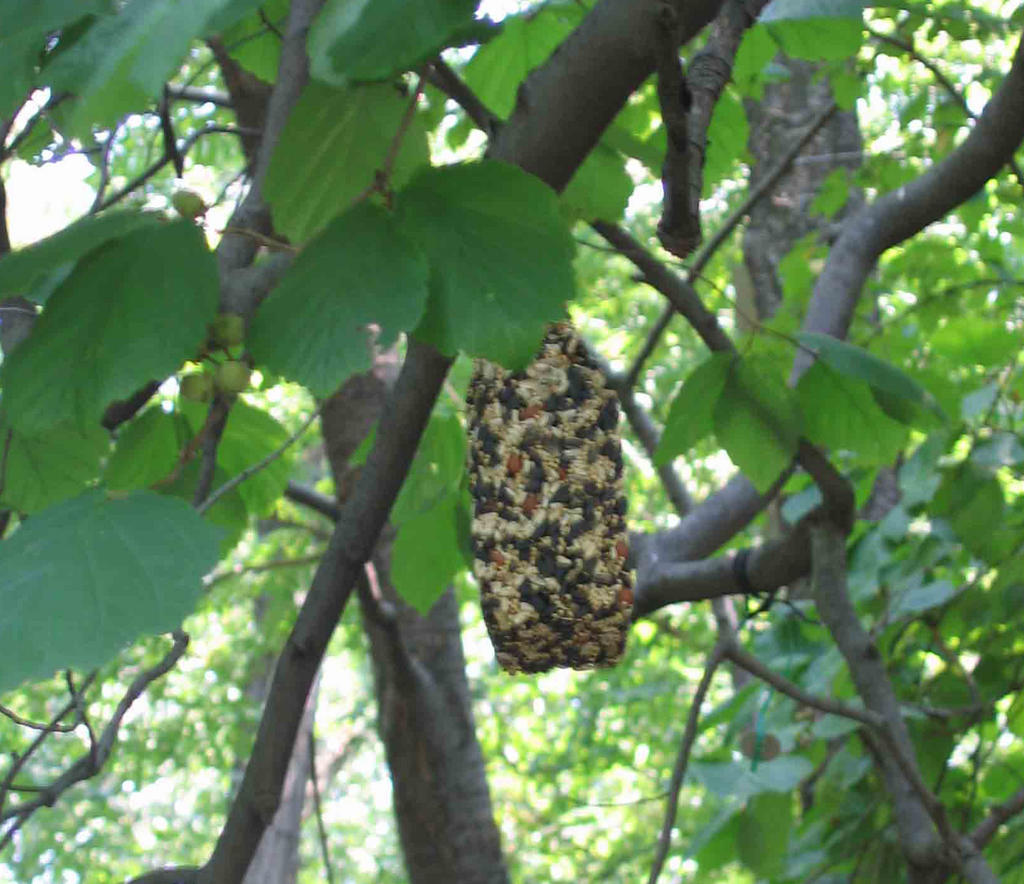
Yes of course! The forest is full of birds! And to think, all these years, I had been assuming that their appetites were sated by the abundant fruits, seeds, & insects that forests naturally provide them. Oh, what a fool I have been!

As seen in Bronx River Park

15 July 2005

Parks Even Parks Doesn't Love

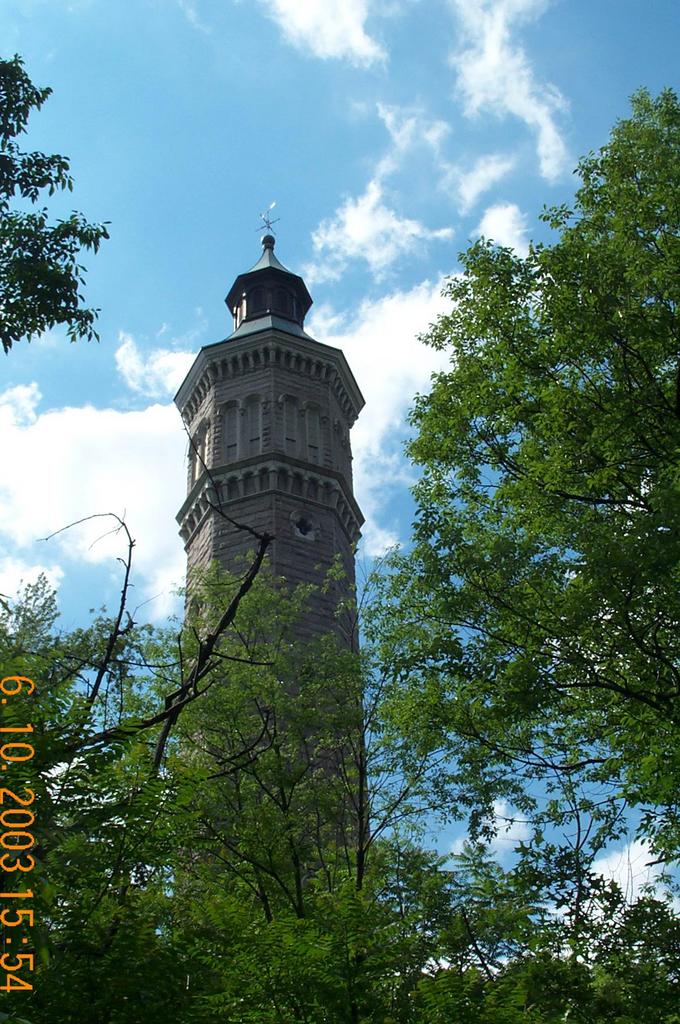
Highbridge Tower

SHAME on you, Adrian Benepe!

(As I missed the boat on linking it, here is the full article. Note that all fancy font work is mine, as are the photos - ed.)


METROPOLITAN DESK - NY Times

Parks Even the Parks Dept. Won't Claim; City Says Some Wretched Areas Aren't Worth Fixing
By TIMOTHY WILLIAMS

At University Woods, a city park high above the Harlem River in the Bronx, hypodermic needles, feces and used condoms littered the grounds on a recent day. Several large trees lay across the main pathway. Broken animal bones that some said bore traces of Santeria rituals were visible.

The 3.3-acre municipal park, whose grounds have long been a hideaway for drug users and prostitutes, was named the city's worst small park last month, for the third year in a row, by the advocacy group New Yorkers for Parks.

Parks Commissioner Adrian Benepe says city parks are in better condition now than they have been in nearly 40 years. He added, however, that a small percentage of the parkland the city owns -- including University Woods -- is not conducive to being actively maintained by gardeners, and that to do so would be ''a waste of money.''

''That park is not a park,'' Mr. Benepe said, referring to University Woods. ''That park is a vestigial landscape on the side of a hill. It has a series of paths that lead nowhere. It's a cliff side. It will never be a park.'' He added, ''Just because something is in our inventory doesn't mean it's worth taking care of.''

New York City has acquired almost 300 acres of parkland since Mayor Michael R. Bloomberg took office in 2002. But critics say that the city started neglecting some existing parks -- most in poor neighborhoods -- long before Mr. Bloomberg named Mr. Benepe parks commissioner shortly after taking office.

Mr. Benepe bristles at the suggestion that the Parks Department favors certain areas of the city over others. ''The reality is that across the city in every neighborhood, the parks are better,'' he said. And while he says there is no formal two-tier system when it comes to maintaining city parks, he acknowledges that some are better cared for than others.

Just how many of the city's 1,700 public parks, playgrounds and recreation facilities are not actively maintained is not clear, but Mr. Benepe said that a limited number of city parks would ''never be great parks'' because they are on land unsuitable to be developed as parkland, or because they are in neighborhoods that are no longer significantly residential.

There is no list, no formal process leading to a park being written off. But it is clear that some parks, over a period of decades, have simply fallen out of favor with the Parks Department, which says that every park is supposed to be cleaned at least once a day.

The department, which decides how often horticulturists visit each park and what capital projects to pursue, has seen its operating budget increase to $201 million in fiscal 2005 from $152 million in fiscal 1997, and the department's capital budget in the current fiscal year alone is $850 million, up from $550 million last year. Much of that amount will be spent on developing recently acquired parkland and on parks along the waterfront, according to Parks Department figures.

Despite their unkempt pockets, some parks, like Aqueduct Walk Park in the Bronx, are heavily used. Many others, however, are similar to University Woods, and attract few visitors. Large swaths of Highbridge and Fort Washington Parks in Upper Manhattan, Soundview, Ferry Point and Pelham Bay Parks in the Bronx, Highland Park on the Brooklyn-Queens border and Idlewild Park in Queens, among others, have been designated natural areas by the Parks Department, to preserve wetlands and other natural habitats. Such areas require less rigorous maintenance than others. Some of these are now impassable for all but the most determined parkgoer due to overgrown trails, poison ivy, homeless encampments and garbage. Abandoned cars and boats have been left in some of the parks.

What these parks have in common is that they rely almost exclusively on city money, while the city's best-maintained parks -- Central Park, Bryant Park and Prospect Park among them -- are managed in part by private conservancies that raise money and hire workers independent of the Parks Department. The neglected parks also lack the community support and involvement present in the neighborhoods around the city's most successful green spaces.

''It is completely outrageous that poor communities are given this type of service when other parks are given adequate service,'' said Geoffrey M. Croft, president of New York City Park Advocates. ''Having prostitutes and drug users fill a park when a community needs parks, goes against everything government is supposed to do in terms of providing services and protecting people.''

The Police Department, not the Parks Department, is responsible for tackling serious crime in city parks. But Mr. Croft said that unmaintained areas provided a natural shelter for criminals.

Mr. Benepe said that any problems that exist are isolated, and that the department has a rigorous inspection process. ''This is a big system and you can't address every little problem,'' he said. Mr. Benepe said a lack of resources was not an issue either. ''The challenge is how to spend all the money we've been given,'' he said.

In all, the Parks Department's 28,800 acres take up about 14 percent of the total land mass in the city's five boroughs. About 12,000 acres of parkland have been designated natural areas, though some, like Central Park's Ramble, are well maintained and free of the trash and invasive species that plague the natural areas of other parks.

University Woods, for instance, has failed the Park Department's own cleanliness and general condition inspections for the past three years, and if its current circumstances are any indication, it has little hope of ever being a haven for anyone seeking a respite from city life. The last capital project in the park -- which involved repairing fences and walkways that are again in disrepair -- took place in 1997.

On a recent weekend in University Woods, in University Heights, a man and woman were seen having sex against a tree. Encampments for homeless people were scattered in the underbrush. Several areas had been littered with hypodermic needles, used condoms, needle cleaning kits and wrappers for ''Savage'' and ''TKO'' brands of heroin. And piles of feces could be seen on staircases.

The only evidence of the park's benches were rivet holes in the ground. There were no garbage cans, lights, restrooms or staff workers. Visitors have reported seeing a dead goat and the skulls of various animals, apparently after they had been sacrificed.

Julio Calderon, 31, who was walking a large pit bull outside the park, said he never stepped inside University Woods, though he lives nearby. ''The park is dangerous,'' Mr. Calderon said in Spanish. ''People who are in there do things I don't want to see.''

The parks commissioner said he would like to trade University Woods to a developer for more suitable park property, or to fence it off. ''You have to be pragmatic about these things,'' Mr. Benepe said.

The Bronx borough president, Adolfo Carríon Jr., agreed but called the park's current neglect a ''disgrace.''

''University Woods cannot continue to be what it is,'' he said.
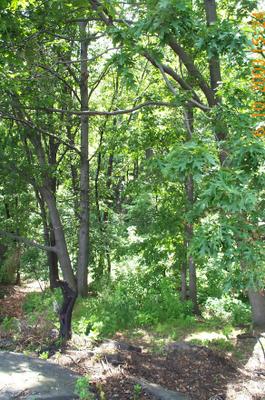
A healthy forest within Highbridge Park. Recently found in the park was a fern species rare in NYC - Spinulose woodfern (Dryopteris carthusiana)

Not far away, in Highbridge Park, which stretches for two miles across Upper Manhattan, the scene was even more grim on a recent weekend. Huge sections of the 119-acre park set aside as natural areas have been taken over by homeless people who have built permanent shacks made of sheet metal and steel pipes driven into the earth. One of the park's residents is a heroin addict and prostitute who would give her name only as Joanne. Her makeshift house has a bed and a nightstand. She said she had lived there for 13 years. Men smoked crack cocaine a few feet from where a youth baseball game was being played.

Kelvin, who would not provide a surname, lives in the park underneath a Harlem River Drive entrance ramp. He lifted his shirt to show his heavily bandaged chest, where he said he had been stabbed the week before. He tapped a Bible on his nightstand, which lay atop some pornographic magazines. ''I almost died,'' he said in Spanish. ''God was with me.'' On a concrete wall, someone has scrawled graffiti: ''This might be the only place where New York is still New York.''

Mr. Benepe said that while Highbridge Park is ''much better than it was 10 years ago,'' it had been ruined decades ago when freeway ramps were built across it.

Mr. Benepe, who expressed both skepticism and surprise at the park's condition when told about it, said the city's plan was: ''Let nature take its course.'' ''Trees are growing, insects are buzzing, oxygen is being produced, and there's nothing wrong with that,'' he said. (Oh, that must be why the NYC Parks Dept is restoring the forests of Highbridge Park with native species - way to be abreast of your own agency, Benepe. And thanks too for negating, in one fell swoop, all the hard work done in Highbridge by both NYC Parks' Natural Resources Group & Bette Midler's NY Restoration Project).

Mr. Croft, the parks advocacy group president, said, ''Having prostitutes, drug dealers and drug users in parks is not going back to nature.''

Photos: Park visitors navigated the overgrown steps in Highbridge Park in Upper Manhattan after taking a swim in the pool. (Photo by G. Paul Burnett/The New York Times); University Woods in the Bronx, which is rife with litter, is rated the city's worst small park. (Photo by Richard Perry/The New York Times)(pg. B1); Some sections of Highbridge Park have been overtaken by drug users, prostitutes and the homeless.; All that remains of a bench above an overlook in Highbridge Park are the supports that held the seats. (Photographs by G. Paul Burnett/The New York Times)(pg. B6)

14 July 2005

Invasive Norway Maples Threatens LI Forests


Exotic Norway maples invading a forest in Queens. Note the dense shade & lack of ground vegetation.

From the Long Island Botanical Society's newsletter, summer 2005 - summary of Wei Fang's research & article:

Norway maple (Acer platanoides)was first introduced to this country in 1760s & quickly gained popularity as an ornamental species. By the late 1990s, it was considered to the be the #1 planted street tree in the U.S. In recent years, Norway maple has expanded from its ornamental realm into sections of parks & nature preserves. Once there, it forms single species (monospecific) stands & inhibits groundcover establishment.

Wei Fang's three year study showed that not only is Norway maple expanding its reach within the forests of Long Island, but as the number of Norway maples increases, so too does the number of other exotics, such as Japanese honeysuckle (Lonicera japonica) & winged burning bush (Euonymus alatus). Furthermore, limits the availability of resources to other plants - its larger leaves exclude other vegetation from receiving sunlight & it changes soil chemistry resulting in higher nitrogen loss.

Here is the abstract.

18 May 2005

Clay Pit State Park


Clay Pit Pond in Staten Island

Had a most amazing day in Clay Pit State Park today - what a beautiful place. Very similar to NJ Pinelands (Barrens) except that we don't have the pitch pine (which is no small matter). There are individuals here and there, but actually pitch pine (Pinus rigida) is native and rare in NYC.

Ostensibly the trip was all about seeing swamp pink
(Helonias bullata) - a Federally endangered plant, in flower. {N.B. I only throw out the location because I know these were PLANTED, which is fine since the species is historically known from this part of Staten Island. I would NEVER EVER reveal a naturally-occurring population - not for all the tea in China, not for all North Carolina.} The only native occurrence of Helonias bullata in New York was known from Kreischerville, Staten Island between 1882 and 1892 in a red maple-sweetgum swamp. In Arthur Hollick's field notes at the Staten Island Museum he noted that he and N. L. Britton did a “wild dance of joy” when they first encountered the plants in May 1882. See what the dancing was all about.

Sadly, dancing did not prevail the day I was out.
We found the plants, but they are doing well; and so were not in flower (they only bloom when stressed). Oh well.


My disappointing view of swamp pink (Helonias bullata) - basal rosettes

Here is a list of some of the things we did see - all new for my records.

KEY: * = exotic, ! = invasive, + = native & rare in NYC, no mark = native & common

TREES
Quercus alba - white oak
Q. bicolor - swamp white oak
Q. palustris - pin oak
Q. velutina - black oak
Quercus x bushii - a hybrid between Q. marilandica (blackjack oak) & Q. velutina

SHRUBS
Amelanchier canadensis - Juneberry
Chamaedaphne calyculata - leatherleaf +
Chimaphila maculata - spotted wintergreen
Comptonia peregrina - sweet fern +
Eleagnus angustifolia * - Russian olive
E. umbellata *! - autumn olive
Eubotrys racemosa - fetterbush
Lyonia ligustrina - maleberry +
Rubus phoenicolasius - wineberry *!
Salix discolor - pussy willow
Spiraea tomentosa - hardhack +
Vaccinium corymbosum - highbush blueberry

FORBS
Comandra umbellata bastard toad flax + (which might be the best common name for a plant ever)
Lepidium campestre *
field pepper
Lespedeza capitata - round-headed bush clover
Linaria canadensis (Nuttallanthus canadensis) - blue toadflax
Symplocarpus foetidus - skunk cabbage
Viola macloskeyi ssp. pallens - smooth white violet

16 May 2005

Walk through the Greenbelt


Downy carrionflower (Smilax pulverulenta) in bud. This vine is a New York State rare plant.

Meeting in SI Greenbelt this morning, walking along one of the trails, the first thing I see is the above downy carrionflower (Smilax pulverulenta), a NYS-rare vine. This is in the same genus as greenbrier & catbrier (S. rotundifolia, S. glauca), which are very common in the city, largely because they withstand disturbance so well. Downy carrionflower is herbaceous & perennial, so the whole above-ground portion of the plant dies back every winter. Here, it is bursting to bloom; looking a lot like pants' zippers after the wearer has enjoyed a particularly filling meal.

My concern was that the 3 plants I found were located along the trail, and one had already been stepped on. Imagine how resilient you would be sans lignin; not very. Hopefully my felled wood barriers will protect them another day.


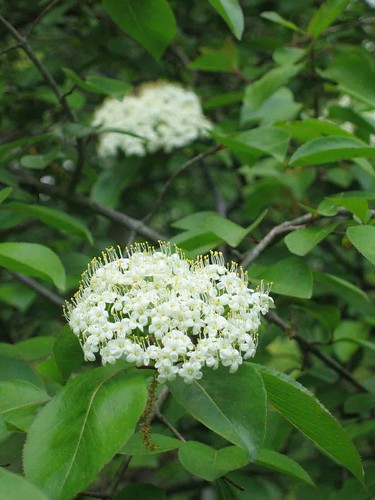
Blackhaw (Viburnum prunifolium) in flower. A common NYC native shrub.

12 May 2005

Orchids and Garbage


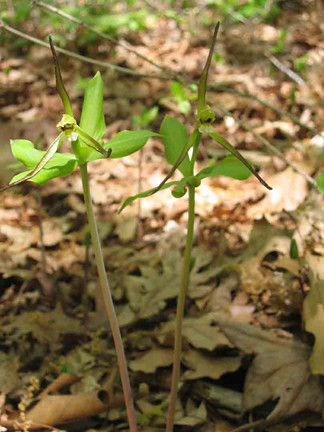
Whorled pogonia (Isotria verticillata), one of NYC's few remaining native orchid species.

Ups and downs, highs and lows, thus are my moods when I am out in the field - either ecstatic or crestfallen. Today, I was both. Somewhere in Staten Island (you'll never get locations out of me), I saw orchids, NYS-rare plants, and lots of degredation caused by humans.

First, the good stuff. In a 40' x 40' area, saw about 500 stems of whorled pogonia (Isotria verticillata), half of which were in flower. This orchid is a congener (same genus) as the Federally-endangered small whorled pogonia (I. medeoloides). These orchids were found in a dry, heath dominated forest they love so, with bracken fern, red/black/white oaks, red maple, sweet gum, sweet pepperbush, blueberries, pinkster azalea, black cherry, bitternut, and sassafras.


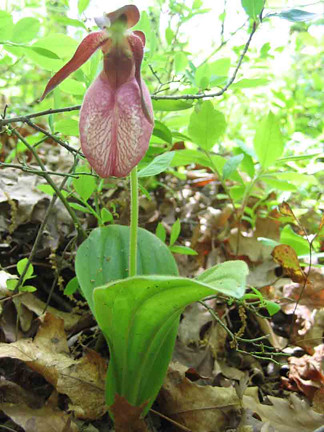
One of the most pilfered plants in the wild because it's arguably our most beautiful native orchid, pink ladyslipper (Cypripedium acaule).

Another wonderful site - pink ladyslipper (Cypripedium acaule) in bloom. Found some teasers early on - just leaves. The one in the photo was hiding behind a fallen log. In all we found 12 ladyslippers, but only 3 were in flower. Years ago, this area was called "Orchid Hill". I think the locals got wind of it and have been stealing orchids from the wild. Little do they know, that once these flowers are taken out of their natural habitat, they die. They cannot survive without filimentous fungi called microrrhizae, with which they have a mutualistic relationship. The fungi, extending into the orchid and the surrounding substrate, bring nutrients and water to the plant, and are critical in every phase of the plant's life. Orchid seeds are extremely small. As such, they have no resources to grow on their own. Without these fungi, the plants would never germinate.


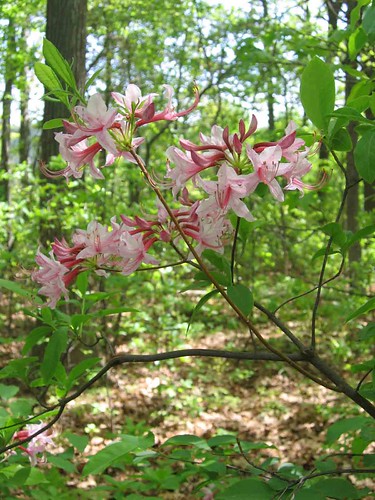
A common compatriot of these orchids, pinkster azalea (Rhododendron periclymenoides), a native shrub.
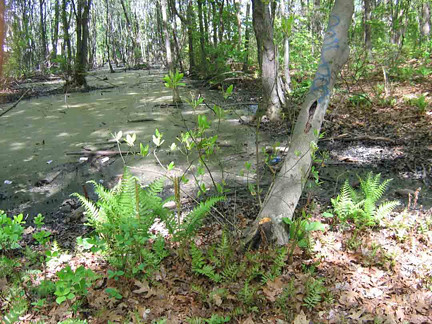
Other plant finds: whorled indian cukecumber (Medeola virginiana), deerberry (Vaccinium stamineum), red chokeberry (Aronia arbutifolia), black huckleberry (Gaylussacia baccata), interrupted fern (Osmunda claytonii), Virginia chain fern (Woodwardia virginica). Another neat find was sweetbay magnolia (Magnolia virginiana). This NYS-rare tree is found in wet areas, SI is the northern part of its range. Now, such plants, being rare, should be given some TLC. That was decidedly not the case in this park, as you can see in the photo below. (Warning, this is where the story starts to take a turn for the worse).

Here, the tree has clearly been vandalized, it has graffiti and a crown (base) damaged by fire. This is not a happy tree. Unhappy trees don't live very long, and so one less sweetbay in New York State.

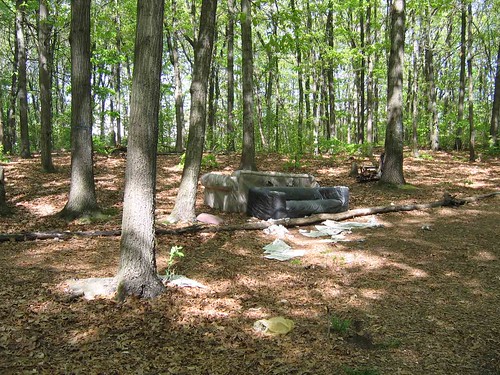
Other areas of the forest are not regenerating due to disturbance. High volume foot traffic and mountainbike/ATV use contribute to the lack of shrubs or wildflowers in the photo below. And obviously, couches are not part of a forest ecosystem.


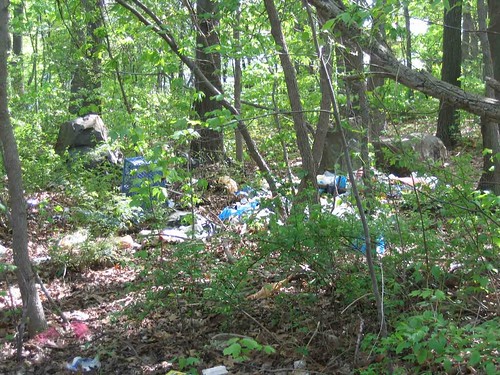
This last one is the pièce de résistance. With this kind of stewardship, the orchids et al. are not long for this world.