White Island Plant Walk
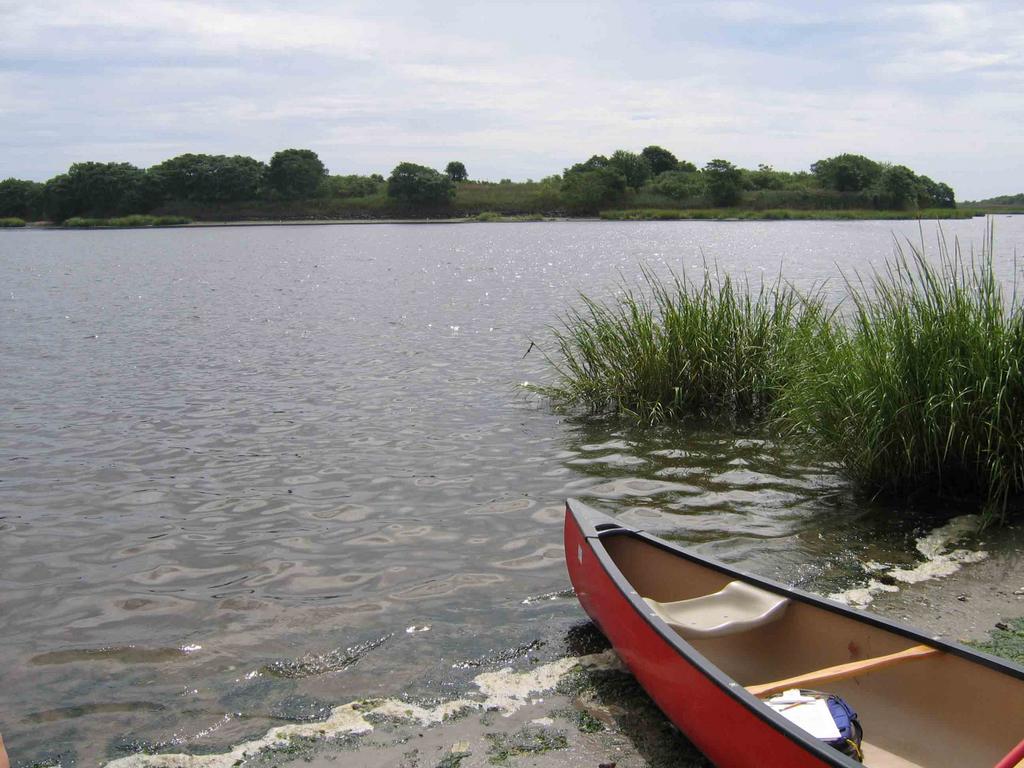
This is the chronicle of the rest of my day in Marine Park, where I was to lead a Torrey Botanical Society plant walk.
White Island is a 73-acre former sand bar in the middle of Marine Park Creek. From the 1940s to 1960s, the site was built up through the addition of household garbage and sand. Areas with little sand cover and thus high levels of nutrients support Phragmites and mugwort. Note the sand bags in the photo below - these were put in place to keep the household garbage, the structural foundation of the island - from washing away.
The sections of the island harboring stockpiled sand today support a diverse array of grassland plants. But to get there, you have to hack your way through what seems like miles of Phragmites. It seemed like miles because I am sure it was miles...but only because my sense of direction was off. It took me quite a while to relocate the open grassland.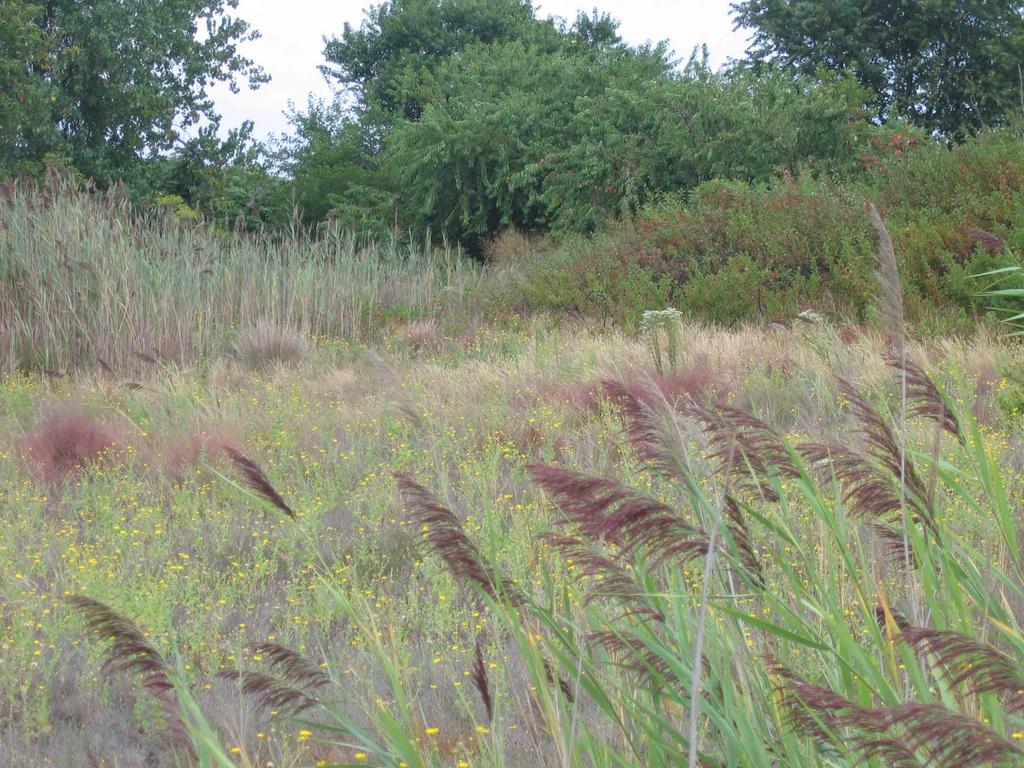
But finally I did. And it was like discovering a wonderland.


Torrey Plant Walk August 28, 2005
Typical Native Grassland Species
HERBS – Flat-topped goldenrod (Euthamia tenuifolia), sweet everlasting (Gnaphalium obtusifolium), pinweed (Lechea maritima), jointweed (Polygonella articulata), saltwort (Salsola kali), early goldenrod (Solidago juncea), seaside goldenrod (Solidago sempervirens);
VINES - northern dewberry (Rubus flagellaris);
GRASSES – beach-grass (Ammophila breviligulata), big bluestem (Andropogon gerardii), 3-awn grass (Aristida tuberculosa), purple love grass (Erigrostis spectabilis), panic grass (Panicum villosissimum), switchgrass (Panicum virgatum), little bluestem (Schizachyrium scoparium);
SHRUBS – false heather (Hudsonia tomentosa), northern bayberry (Myrica pensylvanica), winged sumac (Rhus copallinum), poison ivy (Toxicodendron radicans).
OTHER SPECIES FOUND (* = exotic, ! = invasive)
HERBS – common ragweed (Ambrosia artemisiifolia), Indian hemp (Apocynum cannabinum), mugwort (Artemisia vulgaris)*!, common milkweed (Asclepias syriaca), spotted knapweed (Centaurea maculosa)*, horseweed (Conyza canadensis), winged pigweed (Cycloloma atriplicifolium)*, white snakeroot (Eupatorium rugosum), bedstraw (Galium mollugo)*, camphorweed (Heterotheca subaxillaris)*, yellow wood sorrel (Oxalis stricta), pokeweed (Phytolacca americana), lady's thumb (Polygonum persicaria)*, sheep sorrel (Rumex acetosella)*, horse-nettle (Solanum carolinense)*, black nightshade (Solanum nigrum)*, sand spurrey (Spergularia rubra)*, common mullein (Verbascum thapsus)*;
VINES – hedge bindweed (Calystegia sepium), Oriental bittersweet (Celastrus orbiculata)*!, Virginia creeper (Parthenocissus quinquefolia);
GRASSES – silver hairgrass (Corynephorus canescens)*, common reed (Phragmites australis)*!;
SHRUBS – Japanese barberry (Berberis thunbergii)*!, autumn olive (Elaeagnus umbellata)*!, wrinkled rose (Rosa rugosa)*;
TREES – tree of heaven (Ailanthus altissima)*!, white mulberry (Morus alba)*!, black cherry (Prunus serotina), green ash (Fraxinus pensylvanica).


