Showing posts with label ferns. Show all posts

28 April 2007

Sourland Mountains, NJ

All this rain is ruining my plant walks! I've been looking forward to the Raritain River floodplain walk on Torrey Botanical Society's field trip page. Bluebells, bluebells, and bluebells. They are really just gorgeous. And, for some reason, not in New York. So, I would've gotten my fix if it hadn't rained. And I hadn't gotten lost. Instead, I went to Sourland Mountain Nature Preserve.

Early saxifrage
(Saxifraga virginiensis) on a muddy lump. Note the hairy stems. These sticky stalks protect its precious nectar and pollen from maurading non-pollinators such as ants.

Pennywort
(Obolaria virginica) is an interesting wildflower with its reduced, scale-like leaves. This species is no longer found in NYC.

Emerging rattlesnake fern
(Botrychium virginianum). A persnickety fern, a good indicator of ecological integrity, due to its relationship with mycorrhizal fungi. This species is rare in NYC.
Wild licorice leaves (Galium circaezans)

Jack in the pulpit (Arisaema triphyllum) with deep burgundy stripes on spathe, which acts as an umbrella for the spadix, the actual inflorescence hiding inside which bears tiny blossoms.

23 April 2007

Corson's Brook Woods 07

Last year was my first time at Corson's Brook Woods, and it made a big impression on me - such a mecca of spring wildflowers! So, I visited again this year and it did not disappoint.

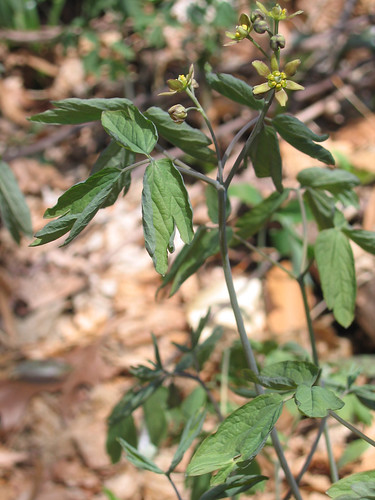
Blue cohosh
(Caulophyllum thalictroides). A striking spring ephemeral, with its unusual flower color and greyish blue glaucous stem. Rare in NYC.

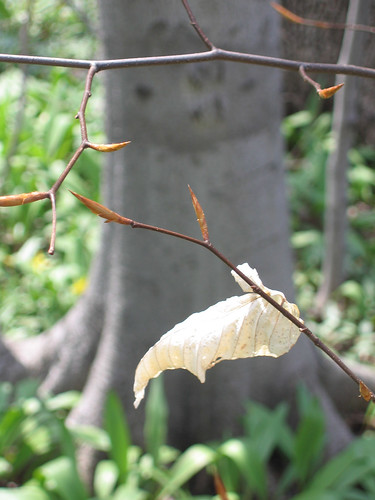
American beech
(Fagus grandifolia). I don't know why, but beech trees hold onto their leaves all winter. They are a welcome splash of color in a winter woodland - and even in spring. Rich forest soils.


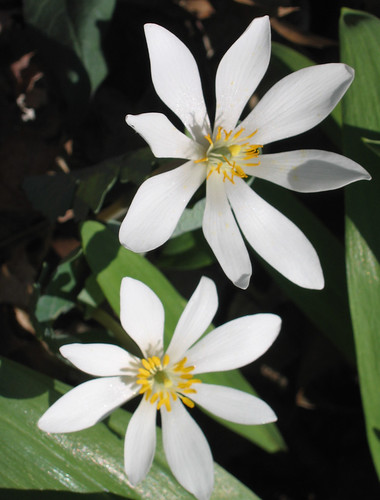
Bloodroot (Sanguinaria canadensis). Pure white. Lovely and fleeting. Rare in NYC.

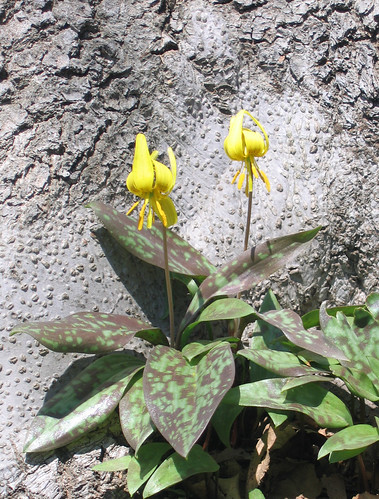
Trout lily (Erythronium americanum). An impressive amount, it just went on and on. These types of shade tolerant species are slow growing, and so such large colonies are very old - the population could've been many decades old.


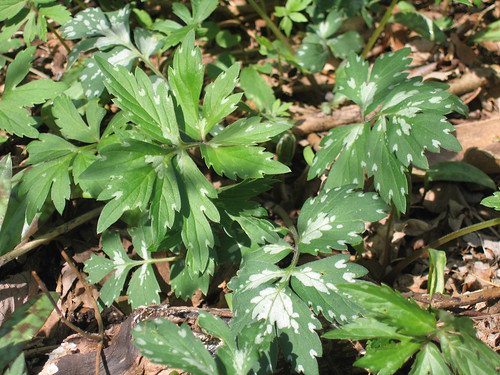
Virginia waterleaf (Hydrophyllum virginianum). Decorative foliage - the silvery spots that look like water stains. I'm surprised this isn't used more in the hort trade. It's a great groundcover. Found in rich forest soils and floodplains. Rare in NYC.

07 October 2005

Good Gardening: Medley


Solomon's seal (Polygonatum biflorum)
Solomon's seal, with it's tall, arching stems and showy foliage, is a statuesque addition to any shade garden. Once in the ground, they require very little attention.

Flowering dogwood (Cornus florida)
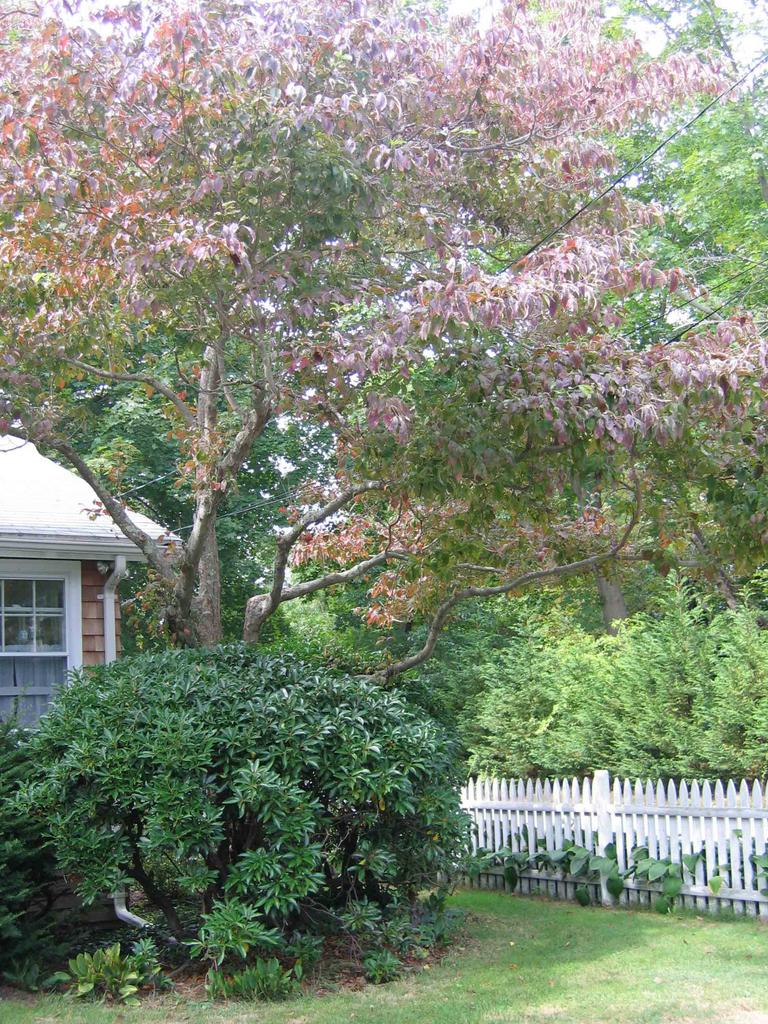
This is another example of why everyone should have a flowering dogwood...the rich fall foliage.

Evergreen woodfern (Dryopteris intermedia) and Sensitive fern (Onoclea sensibilis)
These ferns are attractive as border plantings in moist locations.

Mist flower (Eupatorium coelestinum)
Beloved by gardeners & butterflies alike, this easy-to-please member of the aster family (Asteraceae) is a rampant spreader, so give it lots of room.

14 September 2005

Good Gardening: Maidenhair Fern

Maidenhair fern (Adiantum pedatum). Note that even
ferns have some color to offer the garden palette come fall.


The lovely maidenhair fern (Adiantum pedatum) is a wonderful addition to a shady garden spot. Its delicate foliage whorled atop wiry black stems nicely complements broad-leaved wildflowers. The fern grows to 3 ft., producing spores in July-August, which is the best way to get new plants. It does reproduce vegetatively, but very slowly.

It's natural habitat is rich moist woods and streambanks, in circumneutral soil.
In your garden, this plant does best in well-drained, moist, organic soils - or a comparable situation that mimics its wild environs as much as possible. That said, it isn't terribly fussy. Its whispy demeanor belies its toughness - it can withstand variable situations as witnessed below in this front yard in Brooklyn.

21 May 2005

Blunt Cliff Fern in Harlem


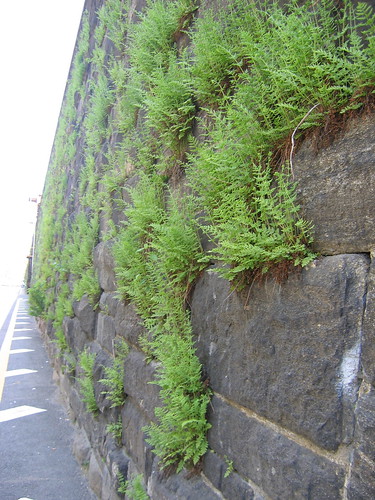
Blunt cliff fern (Woodsia obtusa) festooning the Metro North train trestle in Manhattan. This fern is native and uncommon in NYC.

The ferns are back! Blunt cliff fern (Woodsia obtusa) is growing quickly and by August should be nicely carpeting the sides of the Metro North train trestle that runs along Park Avenue in Spanish Harlem. This fern first came to my attention when I started my job 4 years ago. I walked under the trestle on my walk from the 103 Street 6 train to my office, all the while wondering what species they were but never stopping to look...until finally I did. Woodsia obtusa is not a common plant in NYC. Yet here they were, overwhelming the walls along Park Avenue.

Finally, the following year I did a floristic survey and found that within the mortar of this structure a unique plant community exists, including four fern species that are rare in the City.

Brief history - the trestle extends from 110 to 101 Streets. This portion is constructed of stone and was built in 1870. The mortar was created out of the rock, soil, timbers and various mining debris from creation of the rail tunnel under Park Avenue. Suitable fern habitat was created as these materials weathered and seeps were formed.


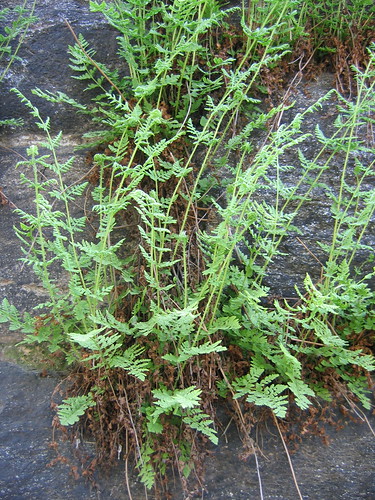
Close up of Woodsia obtusa

Surveys found 43 plant species. Whether native or exotic, the majority of the other plants present in the plots were weedy species more commonly found in marginal areas like vacant lots and roadsides. Five ferns were found, including sensitive fern (Onoclea sensibilis), a common wetland species, able to survive do to water pooling in the masonry. The other four are rare in NYC: ebony spleenwort (Asplenium platyneuron), walking fern (A. rhizophyllum), purple cliff-brake (Pellaea atropurpurea) and blunt cliff fern (Woodsia obtusa), are typical of cliff habitats. At approximately 30 feet tall, this trestle acts as a Manhattan cliff.

If one looks carefull around the perimeter wall of Central Park, you will find both blunt cliff fern and ebony spleenwort.