Showing posts with label autumn. Show all posts

07 November 2006

Autumnal Colors Head North


global warming and fall foliage

Say it ain't so!

Some climatologists have said that even if steps are taken now to limit global warming, temperatures in New England will rise enough over the next half-century that the source of much of that rich fall color, the sugar maples (Acer saccharum), will disappear from most of the region. Healthy stands of sugar maples may be found eventually no farther south than Canada and northern Maine.

18 October 2006

A gorgeous fall day

These pictures will make office workers everywhere weep with envy at how sweet it is to be a field biologist. Today I was working along Staten Island's South Shore.
Fall foliage isn't limited to the trees. Here bracken fern (Pteridium aquilinum) glows a golden hue. {Most people think of ferns as dew-covered fronds growing lushly on the rich forest soils in the umbrage of canopy trees. Bracken fern laughs in the face of convention. It is a sunshine-embracing, sandy soil inhabiting fern. It is adapted to fire, with its root stock (rhizomes) nestled deep in the earth to avoid the flames. It's also quite common - keep an eye out for it the next time you are in the pine barrens or on Staten Island in Conference House Park or Clay Pit State Park Preserve.}

Here you can see clearly the glacial till sandy soils. The vegetation - trees - gray birch (Betula populifolia) and sassafras (Sassafras albidum) and that's a scrub oak to the right. The pine is short-leaf pine (Pinus echinatus). The shrubs are black chokeberry (Photinia melanocarpa) or if you are old school (Aronia melanocarpa) and the gorgeous reds in the background are highbush blueberry (Vaccinium corymbosum). The cloud-like white puffs are narrow-leaved boneset (Eupatorium hyssopifolium var. laciniatum), a New York State rare plant.

19 September 2006

Orchids Found in SI


Today I went out with my pal Ray to root around along Staten Island's south shore...won't say exactly where...and we found two orchid species new to City records – large coralroot (Corallorhiza maculata) and bog twayblade (Liparis loeselii). Large coralroot lacks greenery - it has tawny brown stems and no leaves. This is because it does not photosynthesize. It is saprophytic, meaning it feeds off organic matter, like fungi. It is added in its nutrient intake by a short, stubby, branched root that resembles coral.
Small white, purple spotted flowers appear in late summer.

As the name suggests, bog twayblade is found in wetland, open habitats. It has unremarkable yellowish-green flowers that are only 1/4” long that bloom in late summer.

15 September 2006

Rare Plant Hunting

Today I romped around Pelham Bay Park in the Bronx. I located NYS-listed rare plants Eastern gama grass (Tripsacum dactyloides) and common persimmon (Diospyros virginiana) on an upland copse in Goose Creek Marsh. I noted something interesting – that the Eastern gama grass only appears ringing the upland perimeter of Phragmites, which is highly invasive. Where Phragmites was not observed, gama grass was also absent. T. dactyloides was noted as bearing seeds, but it was too early for the persimmon’s fruits.

Also found a patch of Canada mayflower (Maianthemum canadense). This patch was very small in both size and number of leaves (ramets). Given the undisturbed nature of the site and the seemingly high habitat quality, one would expect to find the plant extensively clonal here - aka a much larger patch. This population will be incorporated into my study of habitat quality using mayflower as an indicator species for forest quality.

New plant listings found and identified from this trip include: climbing hempweed (Mikania scandens), water plantain (Alisma subcordata), three-nerved joe-pye weed (Eupatorium dubium); these are all NYC rare and new finds for the borough. I also found the NYC willow herb (Epilobium coloratum) and the not rare but still cool tussock sedge (Carex stricta).

13 September 2006

New shrub in Fort Tryon

Today I was in Fort Tryon Forest, northern Manhattan. Most people know the garden, but there is also a woodland that hangs over the Henry Hudson Expressway, just south of Inwood Hill Park.

This is one of those sites where there weren't a lot of existing records, because on a casual walk through I got 52 new listings. The most exciting was yellowroot (Xanthorrhiza simplicissima), because this
species is new to City records. The shrub has deep green, pinnately divided leaves, that sprout in a tuft. It flowers in early spring, with many tiny purple flowers in drooping racemes. (And yes, it does indeed have yellow roots). The plant is not native to New York City, its range is south and east, from Pennsylvania to Florida.

04 September 2006

Avalon's Dunes

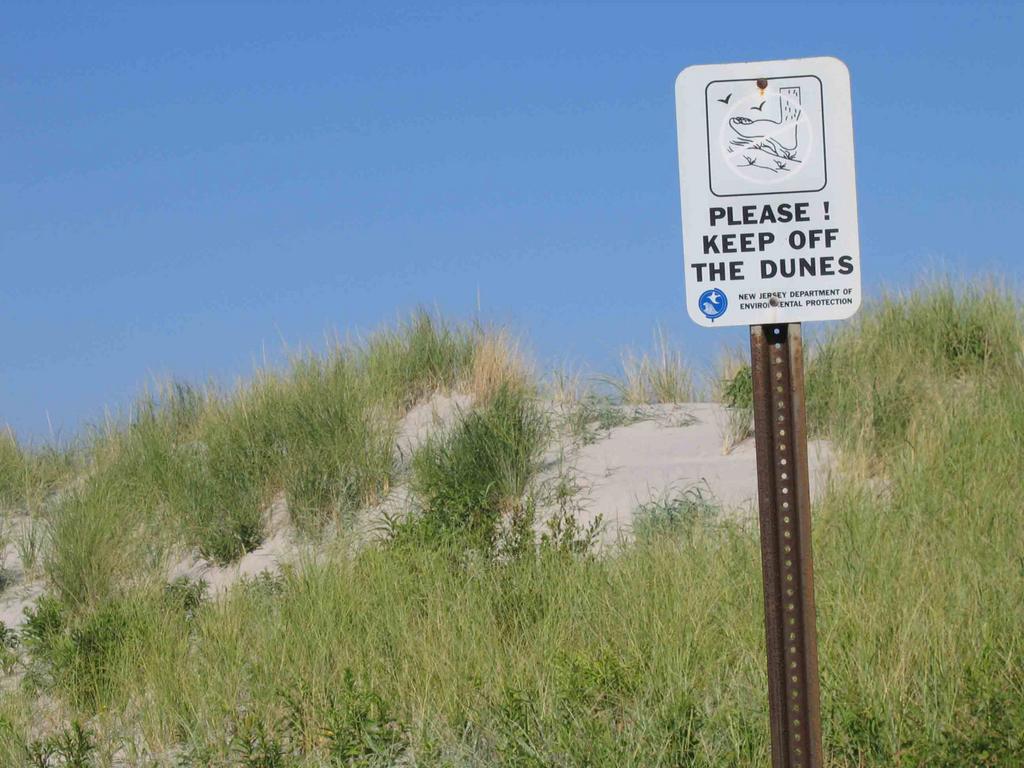
In our second installment of looking at plants in Avalon, NJ, we go from the garden to the dune, much more fun. I didn't walk on the dunes, mind you. Just along the designated pathways.
Dunes! Filled with grasses and forbs.
Maybe the most famous dune occupant, beach grass (Ammophila breviligulata). This is the species that is planted in rows whenever there is an effort made to save the beaches from erosion. Through its extensive root system, beach grass binds the loose sandy soils together. This stability allows other plants to colonize the dunes. Avalon has been preserving it's dunes for over 30 years. (They are allowing new development in the salt marshes, however, but that's for another day).
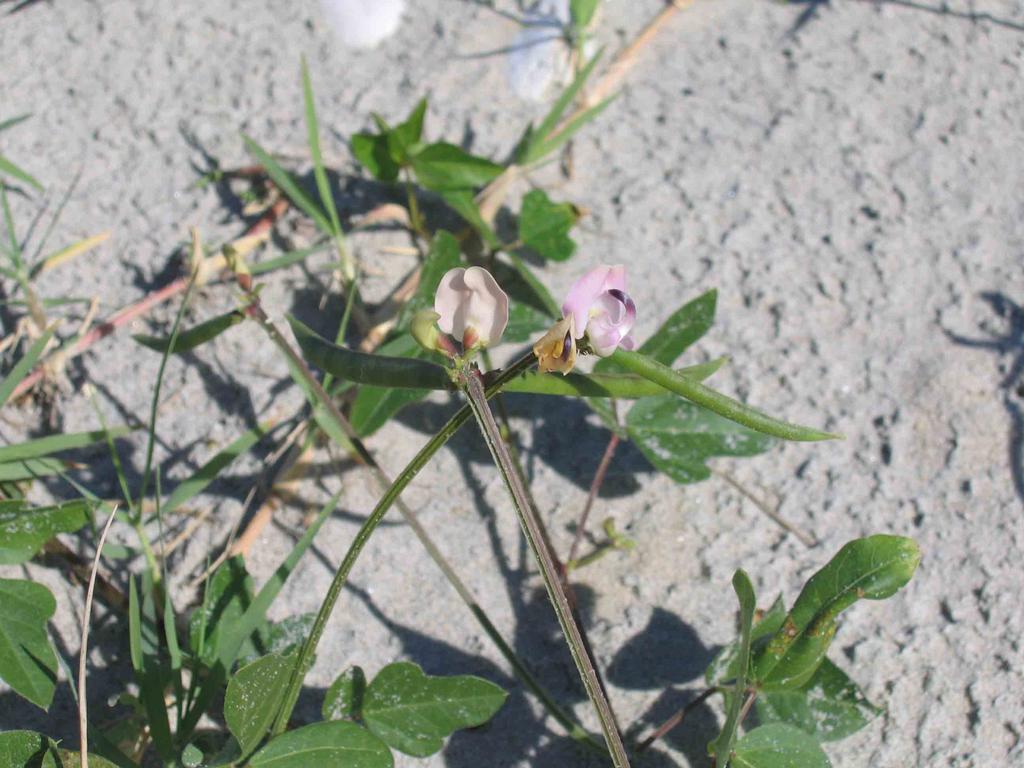
This is a neat plant, trailing wild bean (Strophostyles helvola). It's uncommon in New York City, but fairly common in NJ - because it loves these outer coastal plains. It's a ground-trailing vine in the pea family. This plant is very similar to
pink wild bean (S. umbellata), which is rare in NY State.


Note the fruits are encased in bean-like pods.

03 September 2006

Avalon's Gardens

I'm lucky enough to be able to spend Labor Day weekends down the shore in Avalon, NJ. (And, it is "down the shore", not "at the beach"). Between lying on the beach, under an umbrella and jaunts in the ocean, I, of course, walk the neighborhood and scout out plants. Here, I present "Avalon's Gardens: Dos & Don'ts".

A definite do! Switchgrass (Panicum virgatum) is a great choice for the full sun and well-drained soils that dominate the yards in Avalon. This is a grass that you'd find occurring on its own in such a site. (Ignore the exotic boxwood and juniper flanking it).
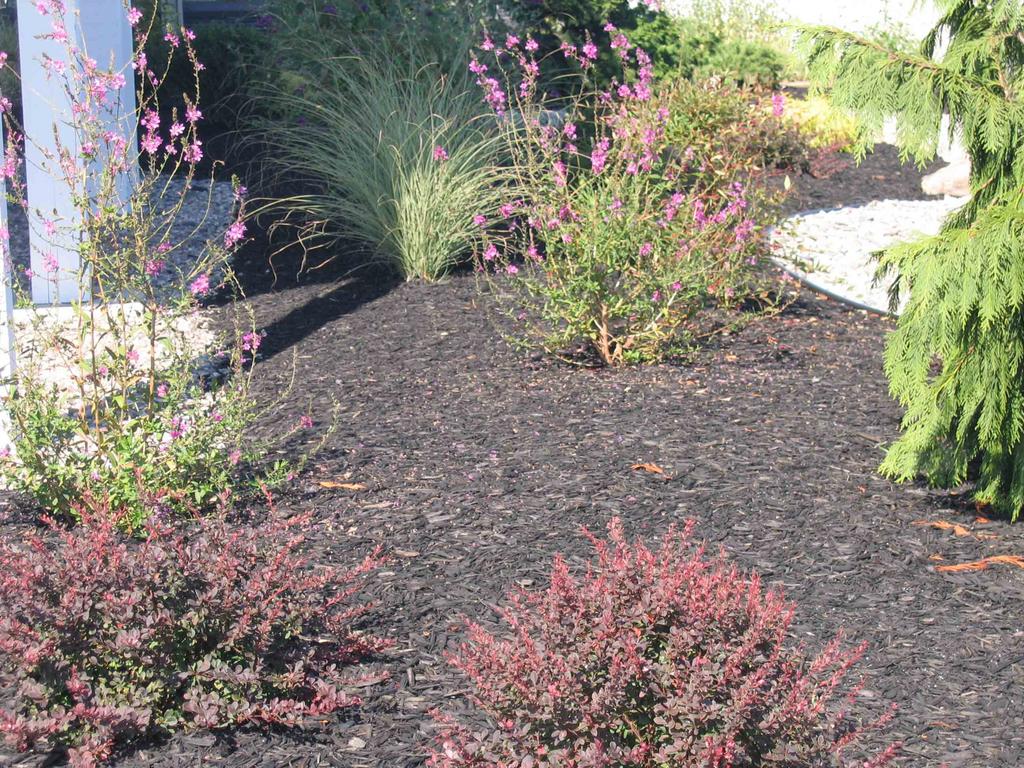
A definite don't! Japanese barberry (Berberis thunbergii) and purple loosestrife (Lythrum salicaria) are highly invasive! And, what's with the cedar chip fetish?
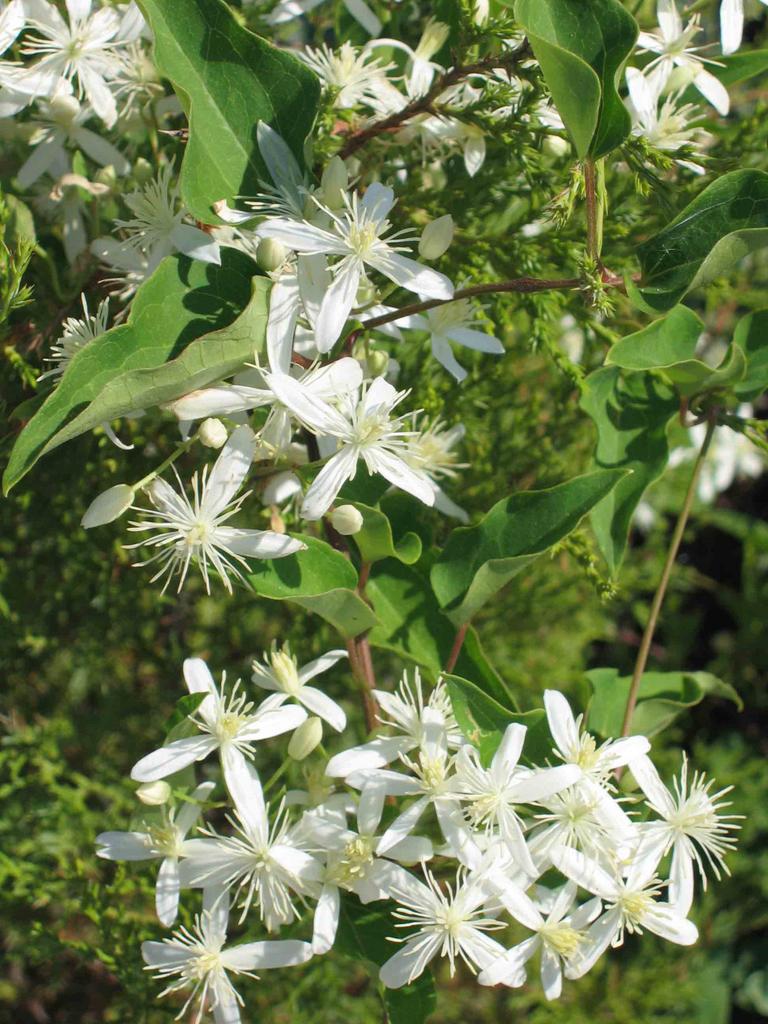
Yam-leaved clematis (Clematis terniflora). Looks great, smells nice, invasive. A don't. This photograph was taken in someone's front yard. You know where else I saw this plant? Along the trees of the Garden State Parkway, for miles and miles.
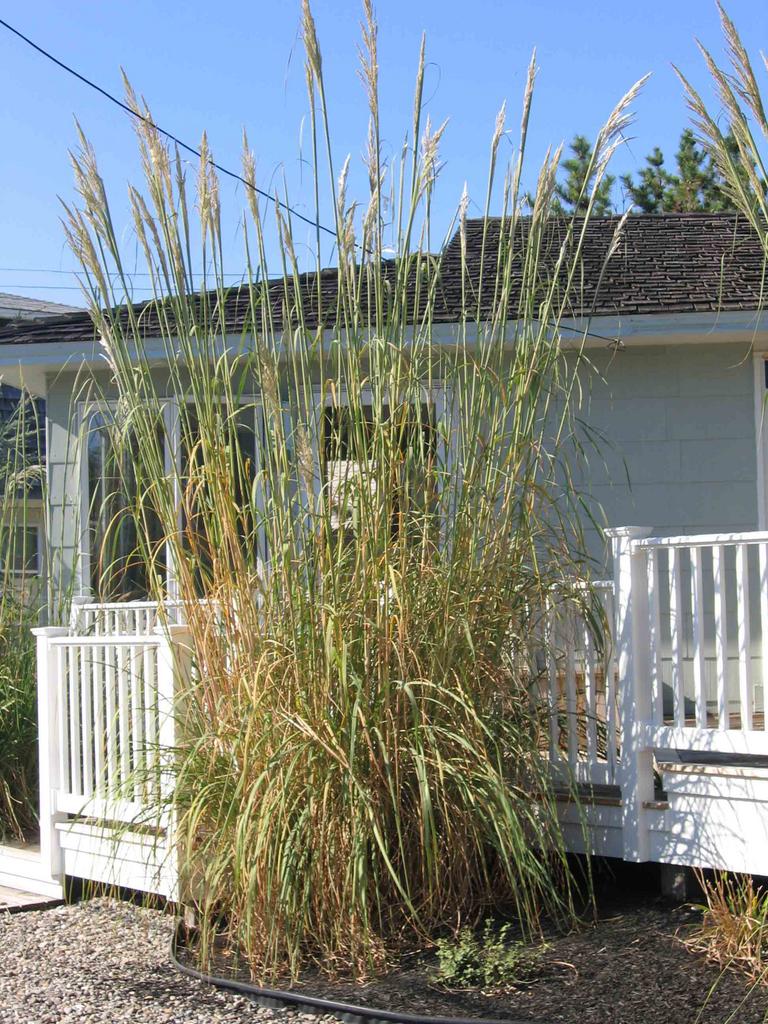
Ah no! Chinese silver grass (Miscanthus sinensis) - invasive! (And obnoxiously huge, no?)

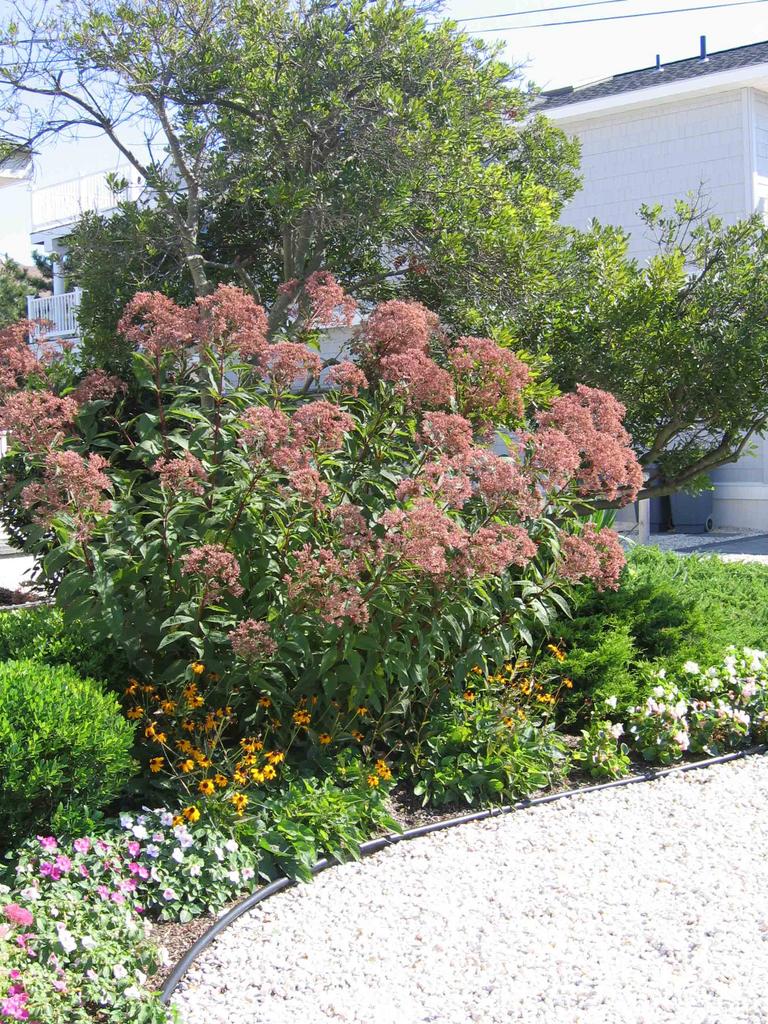
To end on a positive note - a joe-pye weed(Eupatorium sp.). A definite do, and quite the looker. Its a great nectar plant for butterflies, and has interesting seedheads in winter.

31 October 2005

Happy Halloween!

Doll's eyes (Actaea pachypoda {syn. A. alba}) MMMWAH!

Creepy, isn't it? The infructescence of doll's eyes makes an impression on you - wandering in a dark wood in fall, suddenly, it feels as though there are eyes on you. You look down, and it's true!

In late spring, when this member of the buttercup family (Ranunculaceae) is in flower, it would be easy to overlook, with it's small, white, star-like blooms held aloft sharply toothed, compound leaves. At this stage, it closely resembles its congener, red baneberry (Actaea rubra). But the real fun comes later in the season, when stark white berries with dark "eye" spots appear in early fall. (This spot is a persistent stigma from the flower). These berries are collected on a grape-colored stem, which makes quite a striking contrast that lasts over a month. And as tempting as it may be, don't eat them - they are poisonous.

In New York State, doll's eyes is considered "exploitably vulnerable", which means people poach it in the wild. If you come across it, for goodness sakes, don't pick it!

However, it would be easy to enjoy this plant at home - it makes an excellent addition to any garden in partial shade. Growing to 2.5 ft tall, both baneberries are long-lived and willingly germinate from seed.

14 October 2005

Will the real Aralia elata please stand up?

Japanese angelica tree (Aralia elata)??? Nice fall color, which I have never seen on (& reported doesn't exist for) the ubiquitous other Aralia.
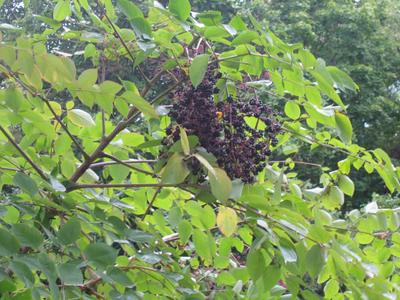
Japanese angelica tree (Aralia elata)??? with infructescence

Devil's walking stick (Aralia spinosa)???

Welcome to the world of botanical taxonomy. For your entre, I thought we would go right for the jugular. Devil's walking stick (Aralia spinosa) is native to the U.S. Most literature cites its range as Delaware & south (e.g., Gleason & Cronquist). One (Mitchell & Tucker) says it's native to New York State. So I called our state botanist who assured me that G&C was right, it is not native to NY. In fact, field work has shown that there is no A. spinosa in the state at all. Everything we have been seeing is actually Aralia elata, an exotic invasive. There is a population of Aralia spinosa out on Long Island, but that was shown to have piggybacked in on nursery stock from North Carolina.

So when a colleague of mine called me to say he had found an interesting Aralia, I was excited. To compare, we began with the familiar.

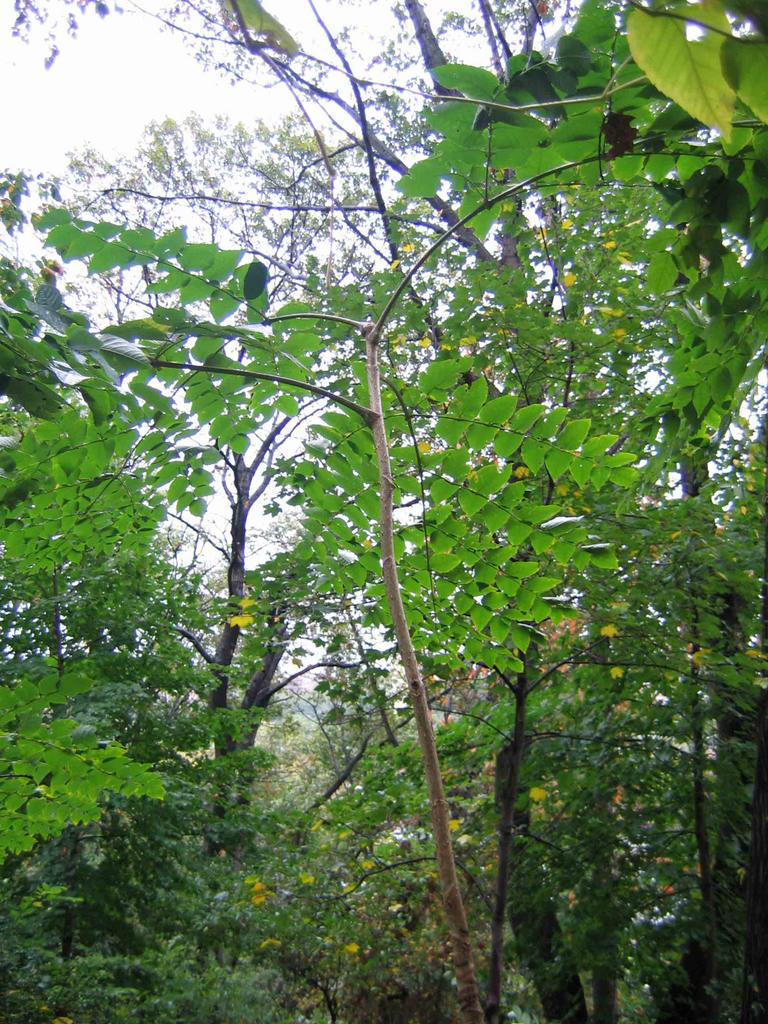
We went to Highbridge Park in northern Manhattan. There was a small cluster of less than 10 shrubs in an opening in the forest canopy, not far off a trail. This is the Aralia shrub that I see all over NYC. It had dark green leaves held at almost a 90 degree angle to the main stem. We were calling this "spinosa" based on the leaves - veination (joined before margin) & finely toothed, no obvious pubescence. The fruit panicles no longer held berries & had already whithered, so we didn't take a sample.

Now, the fun part. Next we went to Fort Washington Park, a subset of Riverside Park in northern Manhattan (around 158 St.). There were maybe 5 shrubs scattered along a stretch between a trail & fencing for the Metro North train line (so not obviously colonial like above). These plants were new to me - I had never seen this species before. We were calling this "elata" based on the leaves - veination (run to margin), broadly toothed & obvious pubescence. Additionally, these leaves were lighter green & held at a more acute angle to the midstem.

So we sent the samples to Brooklyn Botanic Garden - I could barely get to sleep that night, I was so excited to hear back what the new-to-me plant was. Apparently they think they are both the same species...Aralia elata. They said what they really need is the point at which the inflorescence attaches to the main stem - that is the critical piece distinguishing one from the other. Oh. We didn't get that. But still, sometimes I think taxonomists are too by the book. Can't you just tell which is which? If I can ID species with just basal leaves, I expect a little more info when I provide such bounty.

And so the mystery continues..........
OK, OK, I know. Don't go by leaves. Flowers/fruits are more stable, & so the basis of taxonomic determinations. But c'mon - these have to be two different species. (And additionally, if you aren't supposed to look at leaves, then why the difference between Smilax herbacea & S. pulverulenta (NYS rare) - the former has no hair on it's leaves, the latter has hair. Be consistent, people!)
07 October 2005

Good Gardening: Medley


Solomon's seal (Polygonatum biflorum)
Solomon's seal, with it's tall, arching stems and showy foliage, is a statuesque addition to any shade garden. Once in the ground, they require very little attention.

Flowering dogwood (Cornus florida)
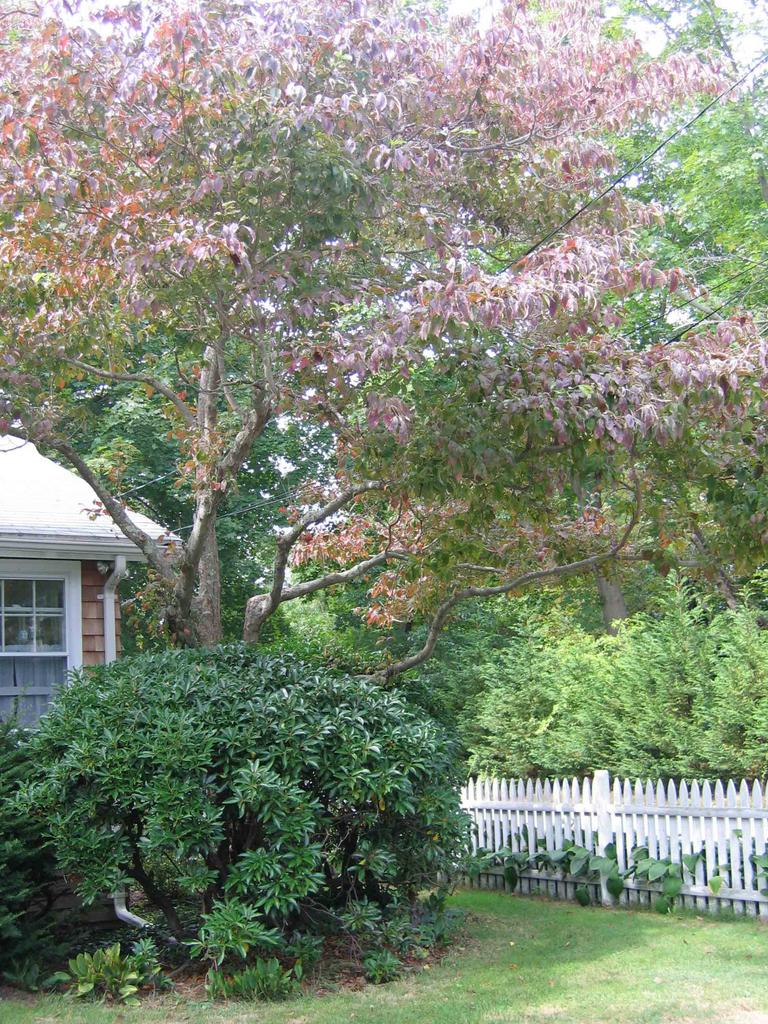
This is another example of why everyone should have a flowering dogwood...the rich fall foliage.

Evergreen woodfern (Dryopteris intermedia) and Sensitive fern (Onoclea sensibilis)
These ferns are attractive as border plantings in moist locations.

Mist flower (Eupatorium coelestinum)
Beloved by gardeners & butterflies alike, this easy-to-please member of the aster family (Asteraceae) is a rampant spreader, so give it lots of room.

19 September 2005

Guess what I found!

Somewhere in Van Cortlandt Park in the Bronx...

Schreber's aster (Eurybia schreberi {formerly Aster s.})
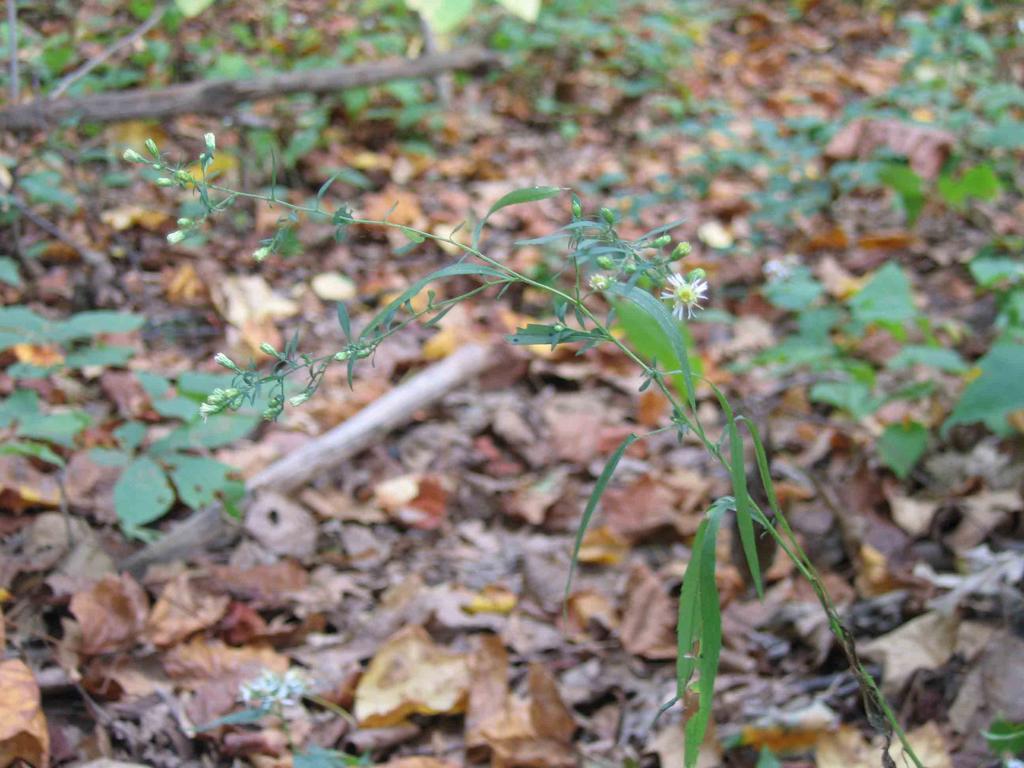
This native species has adapted to life on forest floors by being colonial. That is, it reproduces vegetatively, producing a leafy carpet. When it's happy, it will put up flowers, which are white. Easily confused with large-leaved aster (E. macrophylla), which has light blue blooms. But let's say you missed the boat on the flowers, as I did...what to do? Examine the basal leaves closely. Both species have heart-shaped bases. However, in E. schreberi, if you spread the bases, there is a rectangular shape between the lobes. Large-leaved is simply heart shaped. Obscure? You bet. That's why we botanists make the big bucks. It's important to differentiate between the two, since Schreber's aster is rare in New York State. Both species are uncommon in NYC.


Rough-leaved goldenrod (Solidago patula)
But that was just a teaser. I knew that plant was there. The "guess what I found" is this goldenrod. "They are a dime a dozen," you are thinking. Friend, you would be wrong.

Sure, Canada, early, gray, and rough-stemmed are common along roadsides and in old fields. Even seaside goldenrod isn't limited to its namesake habitat. But S. patula is one of the fabled "wetland goldenrods", which makes it unusual & rare in NYC. I had never seen it.

I found it quite by accident, as is the case with the best botanical finds. I knew it was a special goldenrod, and so marked the spot to return the next day. I came back armed with my Gleason & Cronquist and Britton & Brown. When it keyed out to S. patula, it felt as though I had just won a prize - a new find for the city!